
Choosing the best epoxy product for a concrete floor is less about picking the most expensive brand and more about matching the product’s chemistry and limits to your slab’s condition and your real-world constraints. Moisture in the concrete, surface preparation quality, ventilation, temperature, humidity, and downtime all play a major role in whether your floor lasts for years or starts peeling within months.
Many coating failures happen because moisture testing and proper surface profiling were skipped. Industry guidance emphasizes testing in-situ relative humidity (such as ASTM F2170) and preparing the slab to the correct concrete surface profile (ICRI CSP). If you ignore these steps, even a premium product can fail.
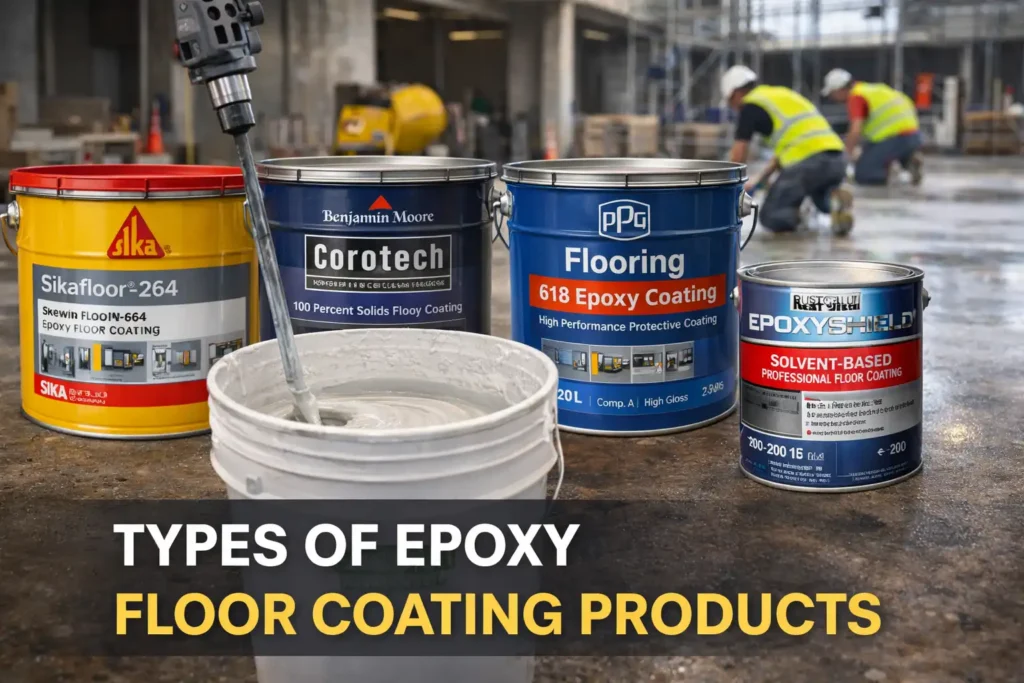
Below is a ranked list of leading epoxy systems and related coatings for concrete floors. The list includes professional-grade systems with high performance ceilings as well as credible DIY-friendly options. The ranking reflects performance potential and clarity of published technical data.
Table of Contents
1. Sika Sikafloor-264 epoxy product
Sika Sikafloor-264 is often considered a specifier’s epoxy when you want a seamless, medium-to-heavy-duty floor with clearly defined moisture and surface profile requirements. It is especially well-suited for contractors and facility owners who want to prevent failures instead of experimenting with basic kits.
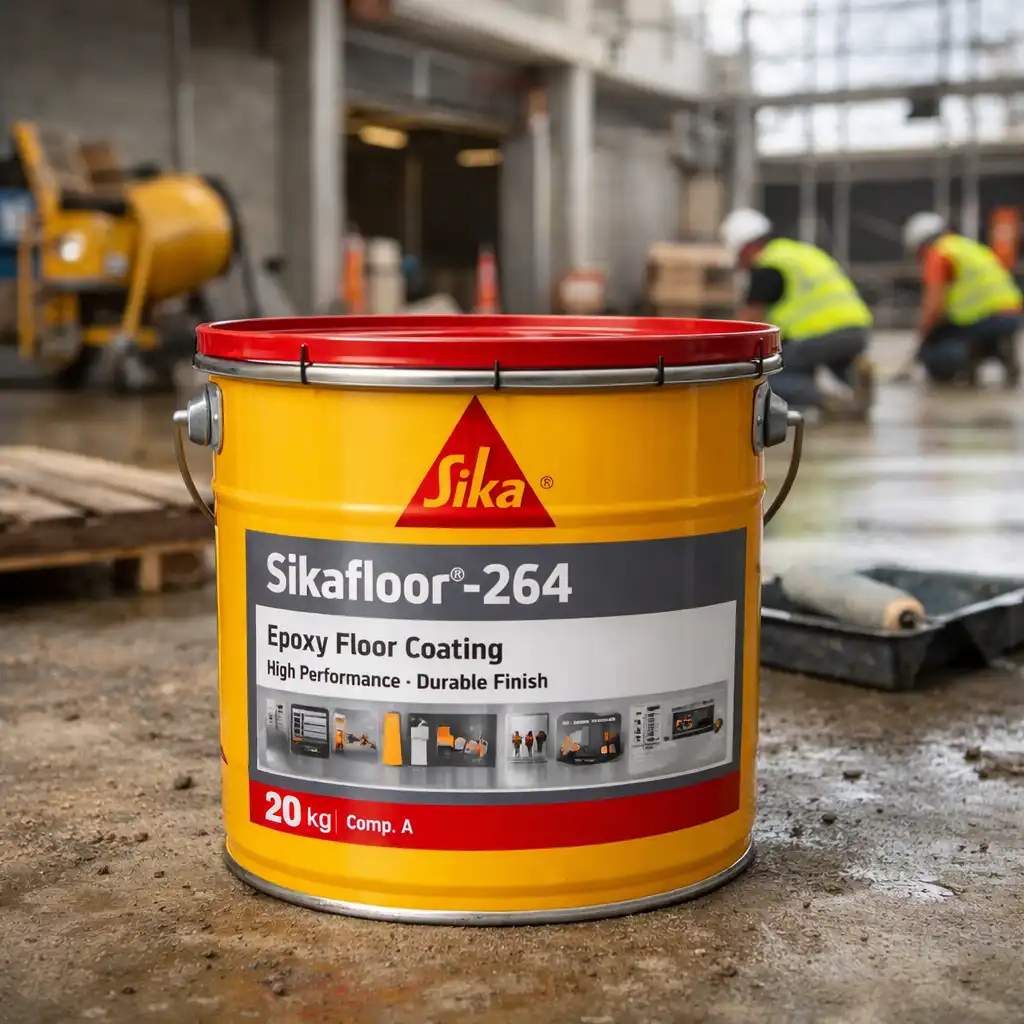
It is a two-part, solvent-free pigmented epoxy with relatively low odor. Pot life ranges from roughly 50 minutes at cooler temperatures down to around 15 minutes in hotter conditions. Foot traffic is typically possible in about 12 hours at moderate temperatures, with full cure around 7 days. Wear coat coverage typically falls in the range of 105 to 135 square feet per gallon at 12 to 15 mils, with slurry options that can go significantly thicker. The product publishes moisture limits, including maximum concrete moisture by mass and relative humidity thresholds, and includes cautions about dew point and UV discoloration.
A common use case would be a workshop near a loading ramp where forklifts operate daily and oil drips are common. After mechanically preparing the slab to the required CSP level and verifying moisture limits, the contractor applies primer and wear coats within the specified recoat windows. The result is a dense, cleanable surface that stands up to traffic and chemical exposure, provided heavy exposure is delayed until full cure.
2. Sherwin-Williams ArmorSeal 1000 HS
ArmorSeal 1000 HS is a heavy-duty, high-solids epoxy that offers strong chemical and abrasion resistance with a longer pot life than many 100 percent solids systems. It is particularly useful for commercial and industrial floors where trained crews can control preparation and recoat timing.
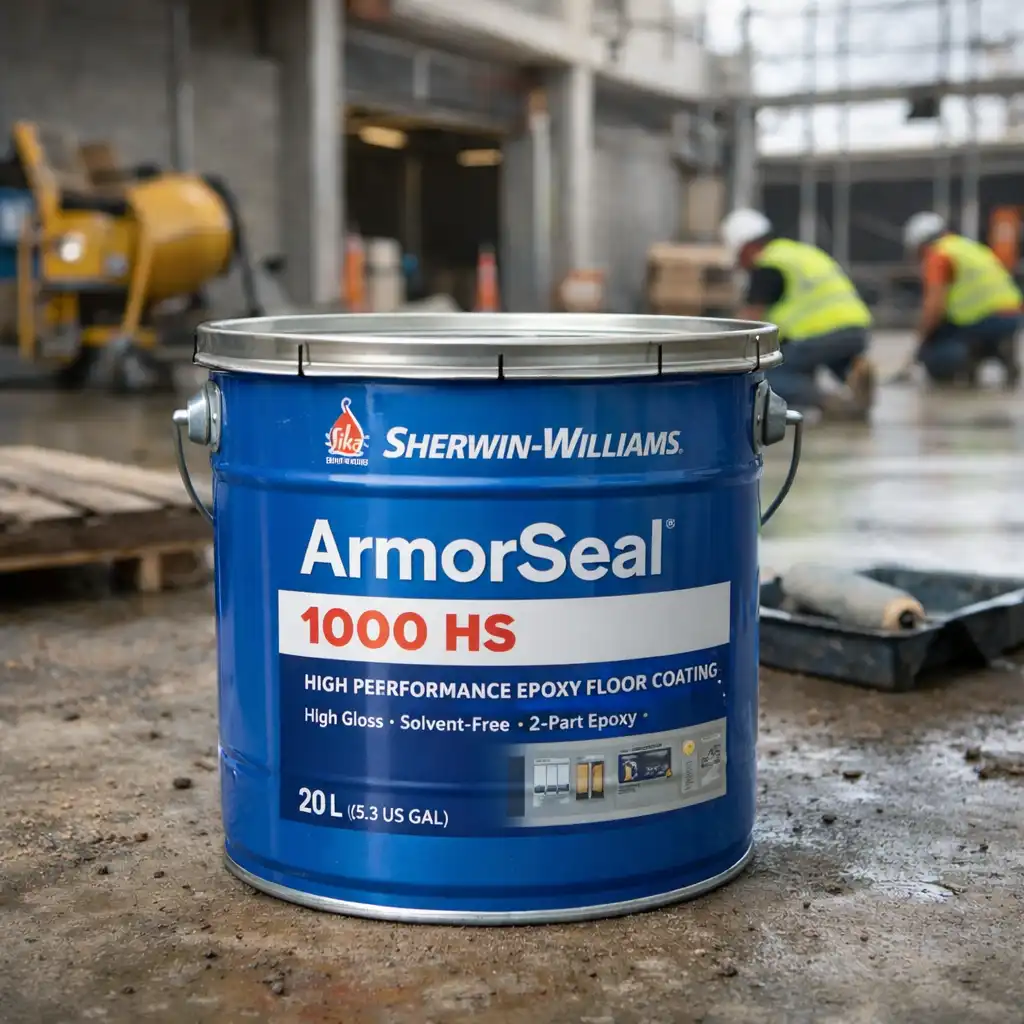
This is a two-component polyamide epoxy with VOC levels under 340 g/L in its unreduced form. Pot life can extend to around four hours at typical room temperatures, making it more forgiving on larger jobs. Foot traffic is generally allowed after about 24 hours, with heavier traffic following in the next couple of days, and full cure around a week. It is commonly applied at 3 to 5 mils dry film thickness per coat and references industry prep standards such as SSPC-SP13 and ICRI CSP guidelines.
In a mechanical equipment room with rolling loads and occasional chemical splashes, the floor would be abraded or shot blasted to the recommended prep standard. Critical edges would be striped, and coats applied to the target mil thickness. If the maximum recoat window is exceeded, the surface is abraded before recoating. The finished floor provides a tough, glossy surface that holds up under heavy use.
3. Benjamin Moore Corotech V430 100 Percent Solids Epoxy Floor Coating
Corotech V430 is a true high-build epoxy designed for thicker applications in the 10 to 15 mil range. It is well suited for experienced DIYers working with help or professional installers who want a smooth, high-gloss finish for shops and interior industrial floors.
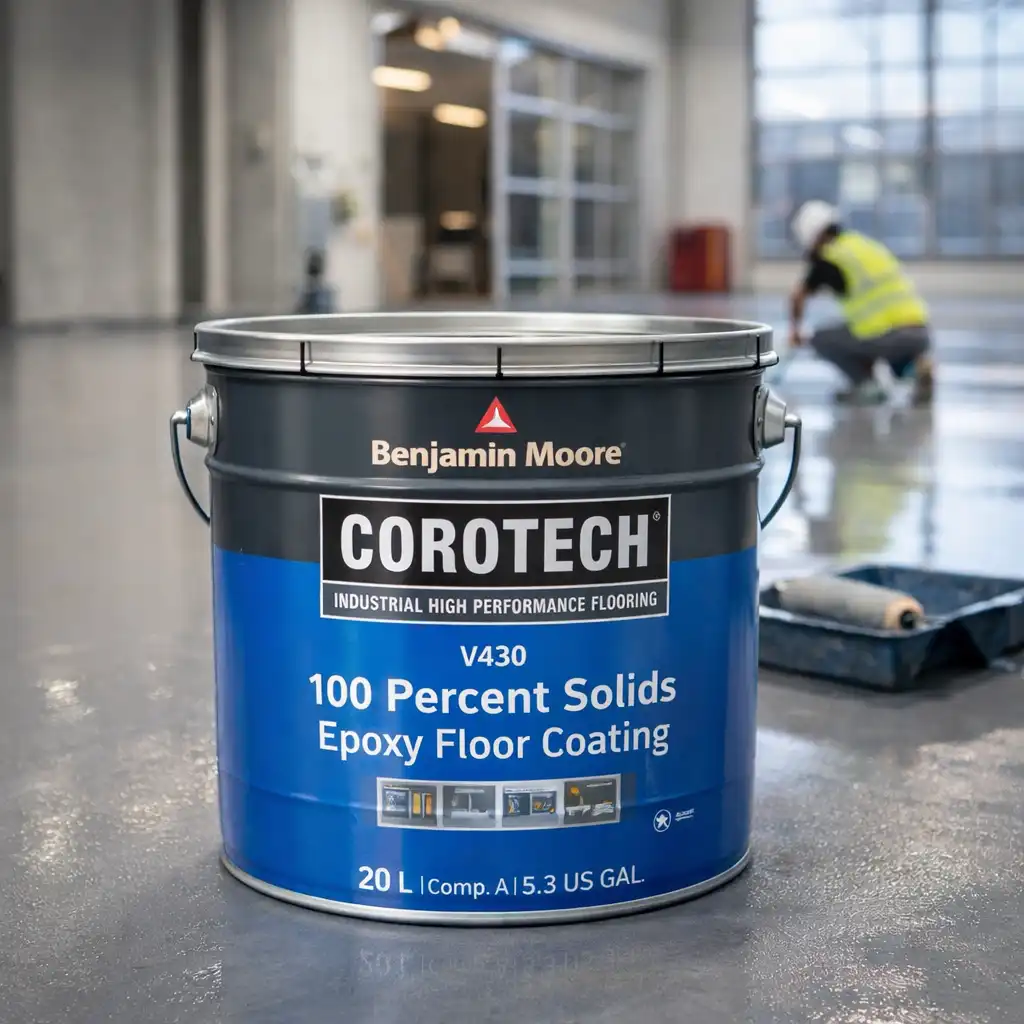
It is a two-component, 100 percent solids epoxy with very low VOC content. Pot life is approximately 30 minutes at room temperature, which requires careful planning. It becomes tack free in several hours, allows recoating within about 12 to 24 hours, and reaches full cure in about 7 days. Coverage typically falls between 100 and 150 square feet per gallon at the recommended film thickness. It is intended for interior use and will amber or chalk under UV exposure.
A practical example would be a home woodworking shop where dust control and easy cleanup are priorities. After degreasing and mechanically profiling the slab, the installer pours the mixed epoxy in ribbons and uses a squeegee to reach the target thickness. The result is a seamless, glossy floor that vacuums and wipes clean with minimal effort.
4. PPG Flooring 618 Epoxy Coating
PPG Flooring 618 stands out when crack resistance and impact tolerance are key concerns. It is a 100 percent solids elastomeric epoxy suited for industrial environments and professional installers who need published moisture vapor limits.
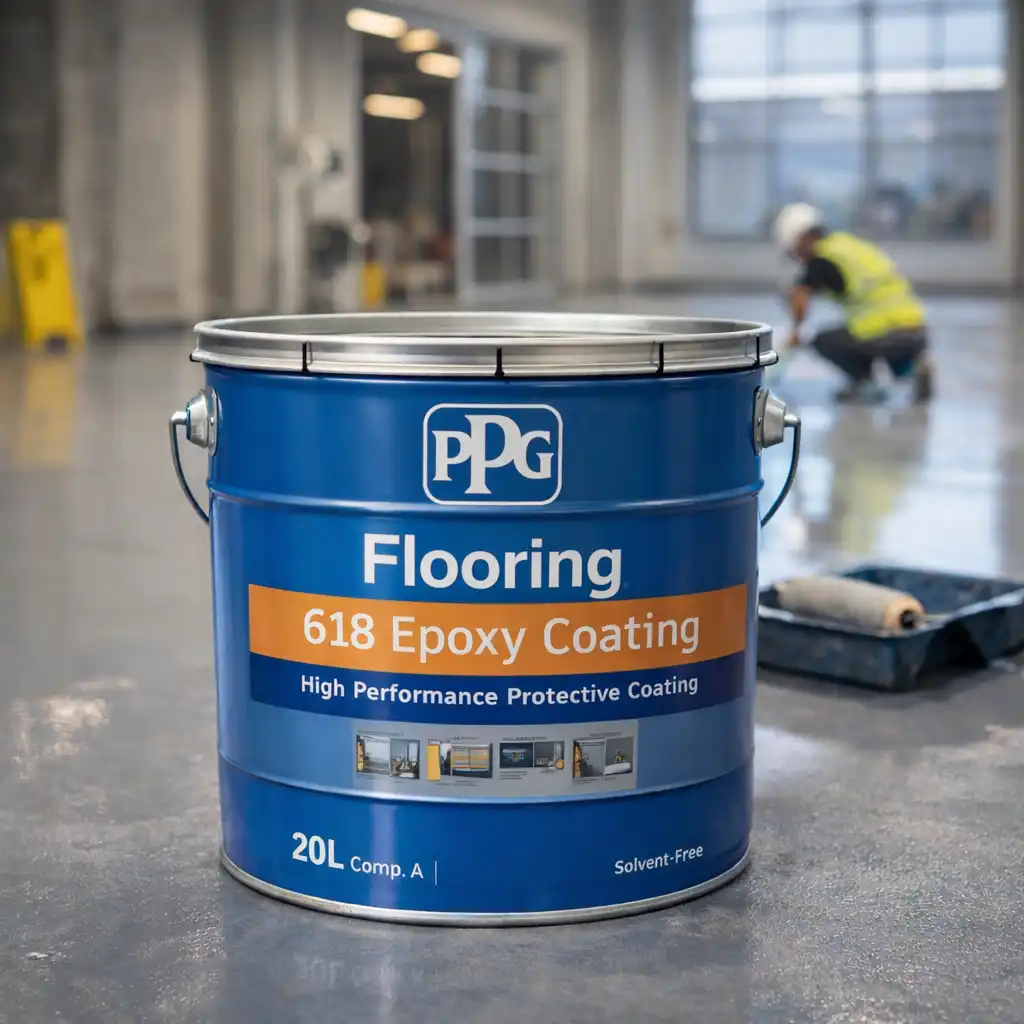
This two-component epoxy has very low VOC levels and typically dries to the touch within several hours, with curing progressing over about 24 hours. It includes a maximum moisture vapor transmission rate threshold and notes example membrane thicknesses such as 25 mil installations for certain conditions.
In an older warehouse aisle with hairline cracks and tight forklift turns, the slab would be prepared to the recommended texture, cracks routed and treated, and the coating installed at a thickness appropriate for either coating or crack-bridging performance. The result is a resilient, chemical-resistant surface that tolerates impact and traffic.
5. Düraamen Perdure E20
Perdure E20 is a 100 percent solids, zero-VOC epoxy designed for high-build performance in occupied spaces where odor control matters. It is especially valuable for contractors working in facilities that must remain operational during installation.
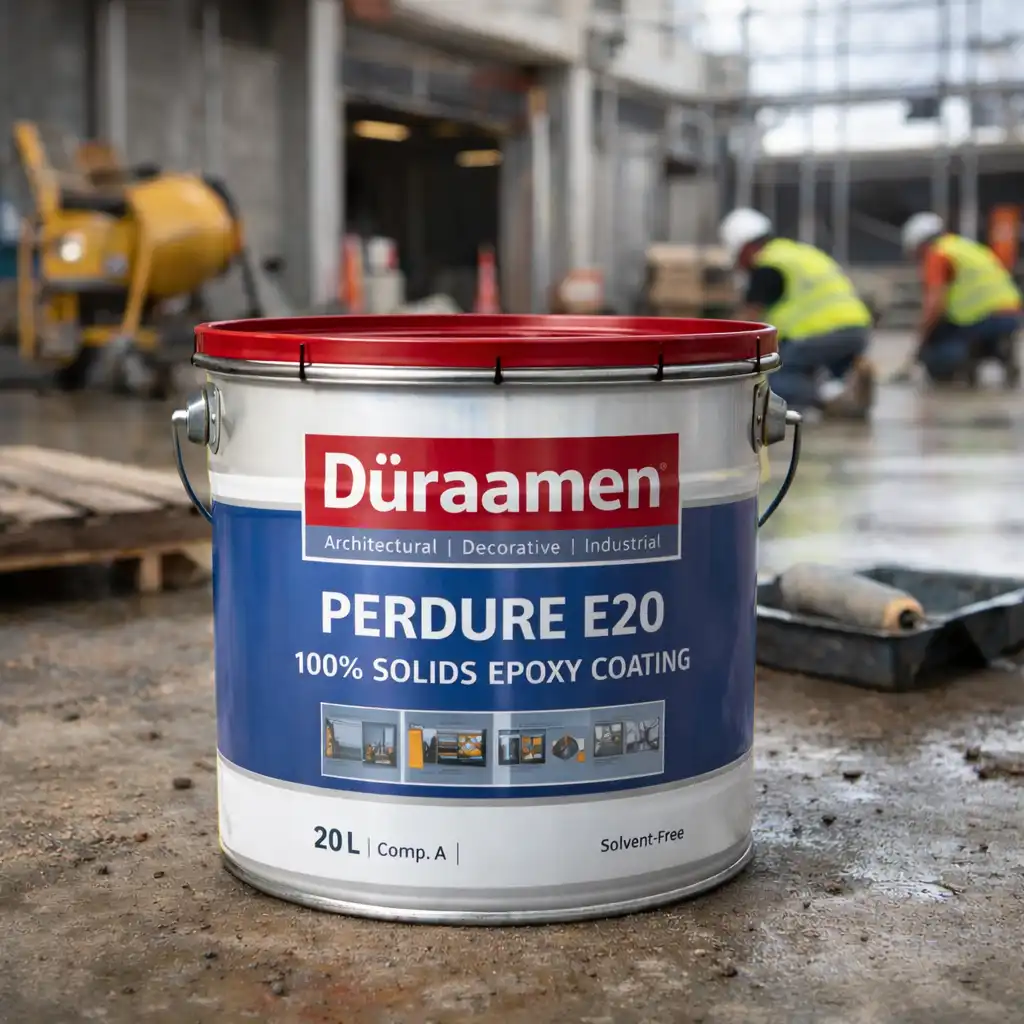
The product uses an epoxy system with aliphatic amines and fillers, has zero VOC, and typically offers a pot life of around 30 to 35 minutes. It dries to the touch in roughly 10 to 12 hours, supports light traffic after about 24 hours, and reaches full cure in approximately five days. Coverage averages around 160 square feet per gallon at 10 mils. Substrate temperature and humidity limits are clearly defined.
Imagine a medical storage corridor that cannot be shut down for long. After mechanical preparation and verification of temperature and humidity conditions, the crew installs the coating to the specified thickness. The result is a glossy, seamless floor that resists chemicals while minimizing odor complaints from staff.
6. Watco High Build Epoxy 100
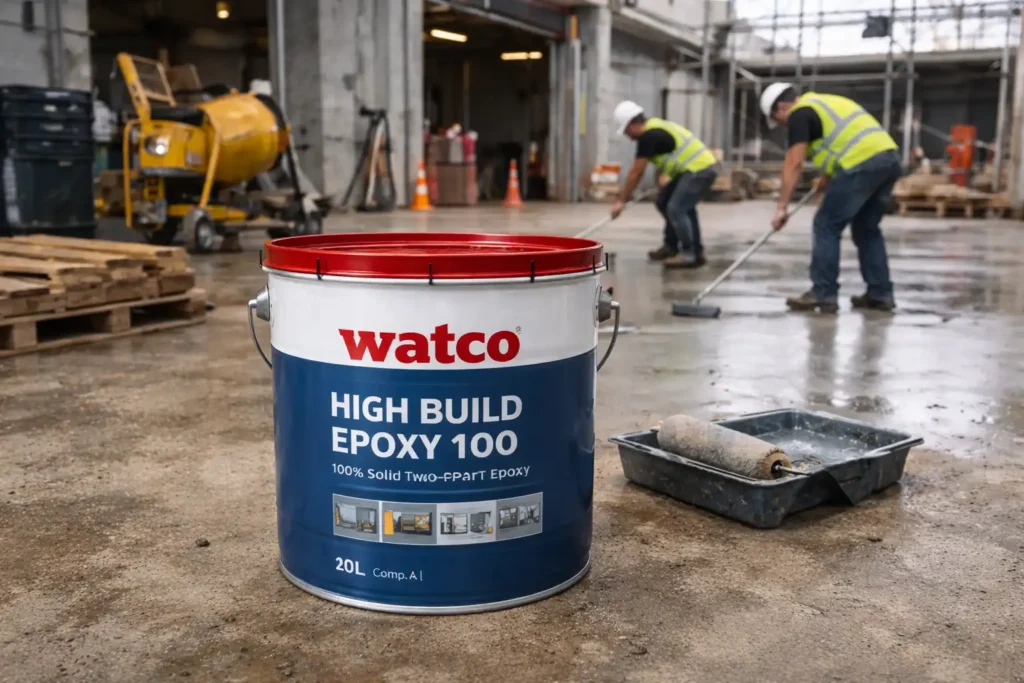
Watco High Build Epoxy 100 appeals to users who want a single high-build coat at roughly 12 mils while still relying on published technical data. It is a good fit for light industrial floors and serious garage or workshop owners who understand the importance of preparation.
It is a two-component system marketed as a high-build epoxy with VOC levels under 100 g/L. Working time is relatively short at around 20 minutes, and light foot traffic may be possible in about 10 hours, with vehicle traffic after a couple of days. Coverage is approximately 133 square feet per gallon at the required 12 mil thickness. The manufacturer cautions about moisture transmission and often recommends priming bare concrete to reduce outgassing bubbles.
In a two-bay hobby garage exposed to hot afternoons, priming first can reduce bubbling caused by slab outgassing. The installer works in smaller sections to stay within the short working time and hits the 12 mil target thickness. The result is a thick, glossy floor that can handle tools, vehicles, and routine shop use.
7. Simiron Polyaspartic HS
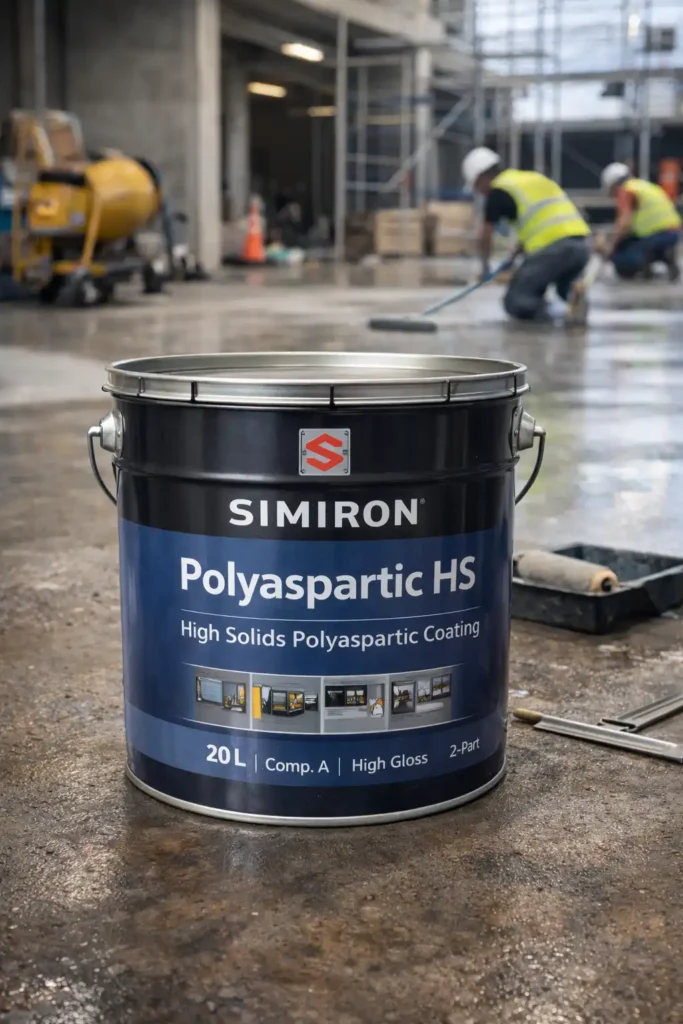
Simiron Polyaspartic HS is not an epoxy, but it is critical to mention in any serious discussion of epoxy floors because it solves two major issues: UV stability and long downtime. It is best used as a topcoat over broadcast epoxy systems when fast return to service is required.
This two-component polyaspartic coating is UV stable and has VOC levels under 50 g/L. Working time varies by speed option, with some versions offering around 25 minutes. Foot traffic can be possible in as little as four to six hours under certain conditions. Coverage ranges from roughly 100 to 160 square feet per gallon depending on film thickness. It specifies temperature, humidity, and moisture limits and may require a moisture barrier primer.
In a sunlit showroom garage where yellowing would be unacceptable, the installer grinds the slab, installs an epoxy broadcast base with decorative chips, and then seals it with the polyaspartic topcoat. The result is a glossy, stain-resistant floor with improved UV stability and rapid return to service.
8. Rust-Oleum Sierra Performance S40 Water-Based Epoxy
Rust-Oleum Sierra Performance S40 is a water-based epoxy designed for zero-VOC, low-odor applications. It is well suited for schools, healthcare facilities, and other occupied commercial spaces with light to medium traffic.
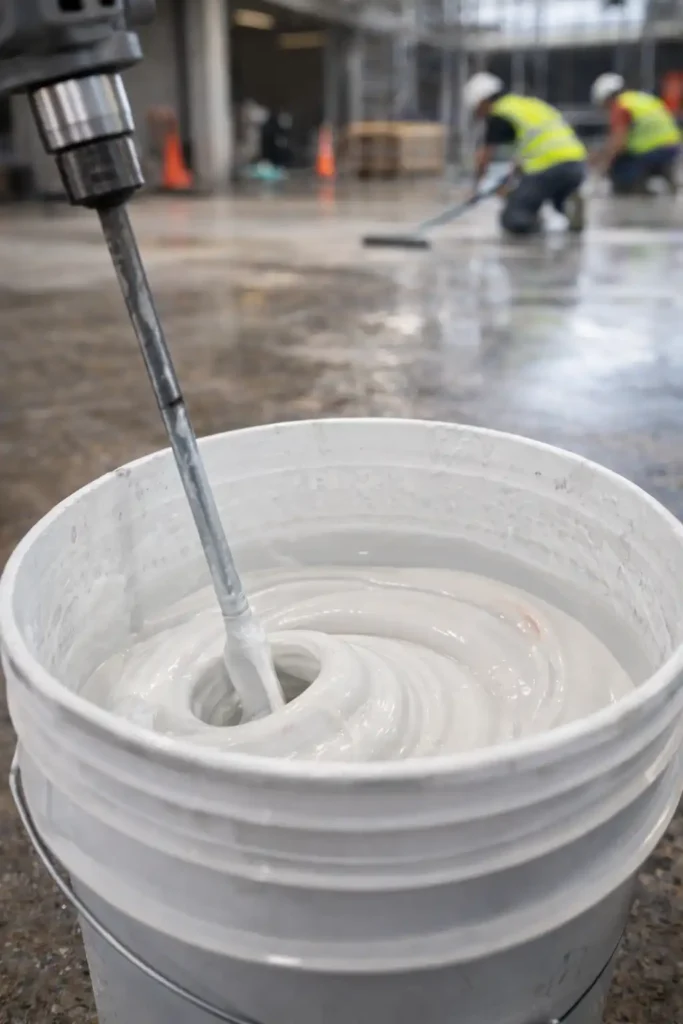
It is a two-component water-based epoxy with zero VOC in the activated material. Pot life can extend to about two hours, which makes it easier to manage for larger areas. Light foot traffic may be possible in a few hours, while full traffic and chemical resistance develop over several days. Coverage typically ranges from 135 to 195 square feet per gallon at recommended film thickness. It includes temperature, humidity, and dew point limits.
In a working kitchen storage area that cannot close for long, the floor is degreased and prepared, then coated within the specified environmental limits. Light access resumes the same day, with normal use following later and harsh chemicals delayed until full resistance develops. The result is a sanitary, easy-to-clean surface with minimal odor impact.
9. Rust-Oleum EpoxyShield Solvent-Based Professional Floor Coating
Rust-Oleum EpoxyShield Solvent-Based Professional Floor Coating is a widely available pro-style kit that steps up from basic paint. It is suitable for garages and mild to moderate industrial floors where users can manage ventilation and follow solvent safety precautions.
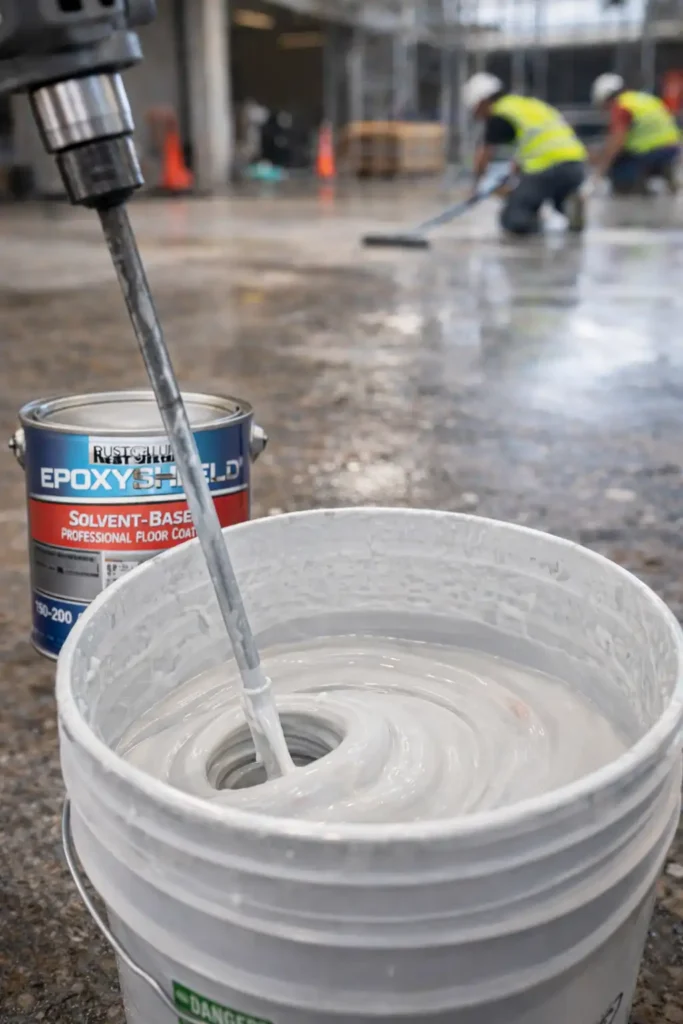
This amine-cured epoxy includes listed solvents and has VOC levels under 250 g/L. Pot life is around two hours with an induction period before application. Light foot traffic may be allowed after roughly 16 hours, heavier foot traffic after about 24 hours, and vehicle traffic after several days. It typically targets 3.5 to 5.0 mil dry film thickness with coverage around 150 to 200 square feet per gallon. It is not intended for floors with moisture problems and includes strict temperature and flammability warnings.
In a budget-conscious two-car garage with a dry slab, the homeowner cleans, deglosses, and patches the floor, then applies the coating within the recommended temperature and humidity window. With strong ventilation and proper safety precautions, the result is a decorative chip floor that improves durability and appearance.
10. QUIKRETE 2-Part Epoxy Kit Garage Floor Coating
The QUIKRETE 2-Part Epoxy Kit is an accessible water-based option for homeowners who want a straightforward weekend project with included cleaner and etcher. It is best for garages and basements without active moisture coming through the slab.
It is a two-part water-based epoxy with VOC levels under 50 g/L. Coverage ranges from roughly 220 to 280 square feet per kit depending on porosity. Light foot traffic is typically allowed the next day, with drive-on time after about three days. It should be applied within recommended temperature ranges and is not intended for outdoor slabs or floors with moisture moving up through the concrete.
In a basement utility room where a water heater may need occasional servicing, the homeowner uses the included cleaner and etcher, rinses thoroughly, allows the slab to dry, and then applies the coating within the specified temperature window. The result is a brighter, easier-to-clean surface that improves the overall look and usability of the space.
nn
A really good blog and me back again.
Thanks!
wish you best and best