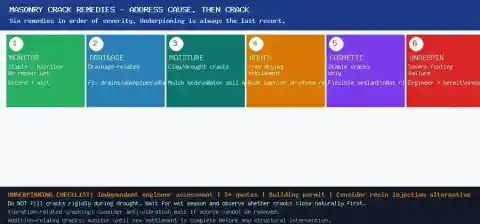
Once the cause of masonry cracking is understood, the next step is choosing the right response. The most important principle is straightforward: address the cause first, and repair the crack second. A filled crack in a wall where the underlying cause remains active will simply re-open, often within one season, and sometimes more severely than before.
Simple Remedies First
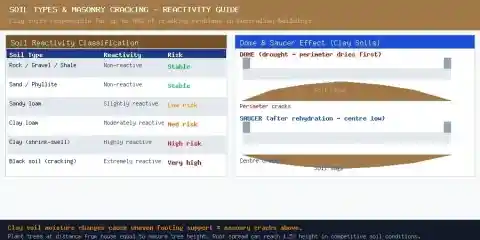
For cracks related to reactive soils and moisture changes, the first measures are often simple and inexpensive. Improving drainage around the building is frequently the most effective single step: ensuring downpipes discharge away from the building, fixing leaking service pipes, and keeping paved surfaces and garden beds graded away from the foundations. Improving sub-floor ventilation where a suspended floor void exists can also help by reducing moisture accumulation beneath the structure.
Where trees are involved, moisture management comes before removal. Mulching garden beds reduces evaporation and helps stabilise soil moisture near the building. An impermeable ground cover with a vertical root barrier can help limit moisture draw beneath the footings. If cracks appear during a dry season, watering the soil around the building and waiting until the next wet season to observe whether the cracks close naturally is often more informative than immediate repair. Filling cracks rigidly during a drought prevents them from closing when moisture returns, and can transfer stress to adjacent sections of wall.
When Root Management Is Needed
Where tree root moisture extraction is confirmed as the cause, a graduated response is appropriate. Root barriers made from concrete or other impermeable materials can be inserted between the tree and the affected footing, to a depth greater than the active surface root system. For more severe cases, removal of the root system or the tree itself may be necessary. Pruning alone is only a short-term measure - it reduces moisture demand temporarily, but the root system remains and recovers.
Underpinning: a Last Resort, Not a First Response
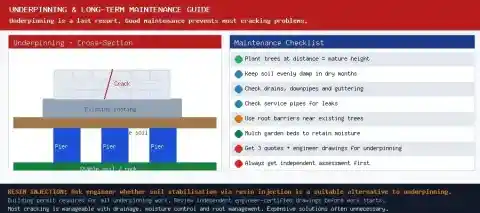
Underpinning is the process of extending an existing footing deeper into the ground to reach more stable soil, or of removing and rebuilding a damaged footing section. It is slow, disruptive, expensive, and technically complex - which is why it should only be considered after simpler remedies have been investigated and ruled out.
Before any underpinning work begins, the following steps are non-negotiable: obtain an independent structural engineer assessment and certified drawings, secure at least three competitive quotes, and ensure a building permit is in place. It is also worth asking the engineer whether resin injection soil stabilisation is a viable alternative in the specific soil conditions - in some cases this can achieve similar outcomes with less disruption and cost.
For cracking related to building additions, new settlement monitoring is often the correct first step rather than immediate structural intervention. For vibration-related cracking where the source cannot be removed, anti-vibration mats at the source may reduce ongoing impact.
Long-Term Maintenance
The most effective crack prevention strategy is consistent maintenance. Key habits include: not planting trees closer to the house than their expected mature height; keeping the soil around the building evenly moist during dry months to avoid extreme shrinkage cycles; inspecting drains, downpipes, guttering, and service pipes for leaks regularly; and using root barriers for any new planting near the building envelope.
Final Thoughts
The best masonry crack repair is the one that addresses the cause. In most cases, that means drainage improvement, moisture management, or root control, and not structural intervention. The discipline of identifying the cause first, monitoring before treating, and obtaining independent advice before committing to major repair work will produce better outcomes - at lower cost - than reactive treatments applied without proper diagnosis.
Be the first to comment.