Cracks in brick, block, or stone walls can be unsettling, but they do not always signal serious structural danger. Most cracks in Australian homes are a reaction to soil movement, moisture changes, or thermal cycling. The challenge is that without understanding the cause, homeowners risk spending large sums on treatments that are unnecessary, ineffective, or that mask a problem without resolving it. A crack is a symptom, not a diagnosis.
What Crack Patterns Tell You
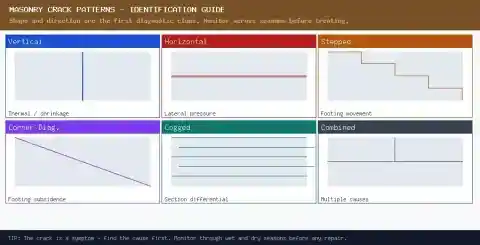
Vertical cracks near wall ends typically indicate thermal movement or drying shrinkage. Horizontal cracks may suggest lateral soil pressure or a failing lintel. Stepped cracks following mortar joints are a classic sign of differential footing movement, where one section of the foundation has settled more than another. Diagonal cracks from window or door opening corners are frequently associated with footing movement or soil settlement beneath that point. Cogged cracks with an irregular pattern suggest differential movement between two structural sections. Combined patterns indicate multiple causes and require careful investigation before treatment.
Position matters as much as shape. A stepped diagonal crack at the north-east or north-west corner of a building often links to solar drying of clay soils on the northern face, not to anything structurally wrong with the wall itself.
Seasonal Monitoring
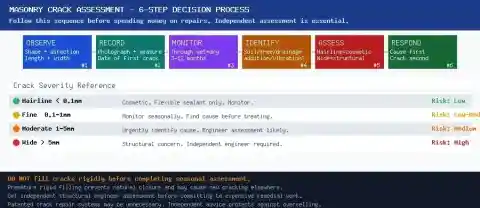
Monitor a crack through at least one full seasonal cycle before treating it. A crack that opens in dry summer and closes after winter rain is behaving very differently from one that grows consistently year-round. Photograph the crack with a scale reference, mark its ends with a date, measure its width, and check monthly. Three to twelve months of data across wet and dry periods will reveal more about the cause than any single inspection. Do not fill cracks rigidly too early - premature rigid repair prevents natural closure and may create new cracks nearby.
Crack Severity Guide
- Hairline (< 0.1mm): Usually cosmetic. Flexible sealant only. Monitor.
- Fine (0.1-1mm): Monitor seasonally. Find cause before treating.
- Moderate (1-5mm): Identify cause urgently. Engineering assessment likely needed.
- Wide (> 5mm) or active: Independent structural engineer assessment required before any repair.
Final Thoughts
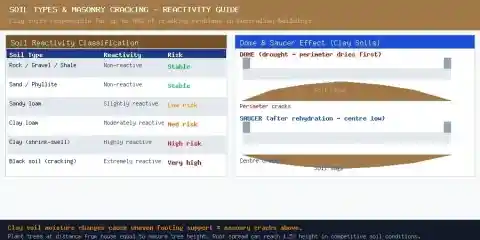
Masonry cracks are common in Australian homes, particularly where reactive clay soils and variable rainfall combine. Most are not signs of imminent failure - they are information about the soil, drainage, vegetation, and how the building responds to its environment. Reading that information correctly, monitoring patiently, and getting independent advice before spending money are the three habits that consistently produce the best outcomes for building owners.

Be the first to comment.