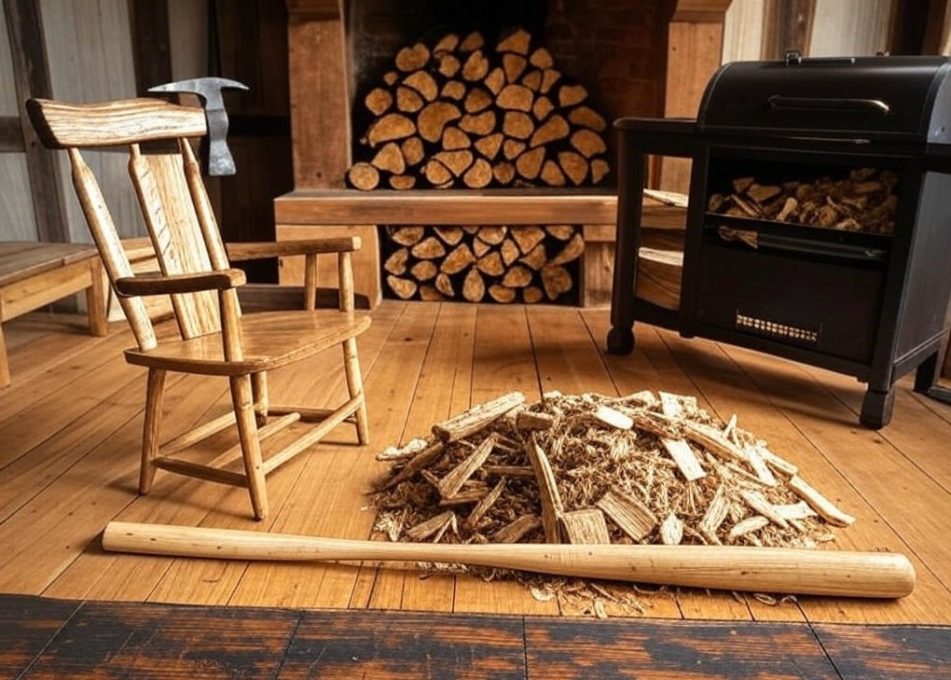
Uses of Hickory wood stand out as one of the most versatile and durable hardwoods in North America. It combines exceptional strength, toughness, hardness, and stiffness in a way no other commercial wood can match.
Distinguished by its light to medium brown colour with reddish hues, hickory has become highly prized across various industries for its unique properties.
Known as the hardest hardwoods with outstanding wear resistance and shock absorption capabilities, hickory trees typically live 150-200 years and provide wood that blends functionality with aesthetic appeal.
The following are the top ten most valuable and practical applications for this remarkable wood that showcase why it remains in high demand despite its challenging workability.
Table of Contents
1. Tool Handles
Hickory’s unparalleled combination of strength, durability, and shock resistance makes it the premier choice for tool handles of all kinds. Hammer, axe, pick, and maul handles benefit from hickory’s natural springiness that helps absorb impact shock, making them less likely to break during heavy use.
This wood can withstand tremendous pressure and manipulation without failing, which is crucial for tools that endure constant stress. The density of hickory enables tool handles to endure heavy use and abuse while maintaining their integrity, making it particularly valuable for striking tools where failure could be dangerous.
Woodworkers have long recognized that despite being difficult to work with, no other wood possesses the same characteristics that make hickory ideal for applications where reliability under stress is essential.
2. Uses of Hickory wood for Furniture Construction
The exceptional durability and distinctive appearance of hickory have made it a popular choice for furniture manufacturing throughout American history. Tables, chairs, benches, shelves, and cabinetry made from hickory offer both visual appeal and remarkable longevity due to the wood’s resistance to wear.
The contrasting colours between Hickory’s heartwood and sapwood create what’s sometimes marketed as “Calico Hickory,” giving furniture pieces a rustic, character-rich appearance that many homeowners seek.
Furniture makers appreciate that hickory pieces can withstand generations of use while developing a beautiful patina over time. Though challenging to work with due to its density, properly crafted hickory furniture represents an investment that can last for decades, combining functional durability with natural beauty.
3. Hardwood Flooring
Hickory has emerged as one of the most sought-after options for hardwood flooring due to its exceptional hardness and wear resistance.
Flooring applications represent one of the predominant uses of hickory lumber in modern construction, taking advantage of its ability to withstand heavy foot traffic in both residential and commercial settings.
The Janka hardness rating for hickory is significantly higher than many other domestic hardwoods, making it approximately 25% harder than sugar maple and considerably more durable than red oak for high-traffic areas.
Hickory floors showcase a wide range of natural brown, red, and tan colour tones that create visual interest and character that many homeowners find appealing.
The natural variation in colour between heartwood and sapwood provides distinctive patterning that can be either enhanced or subdued through different staining techniques.
4. Smoking and Barbecuing
Hickory wood has achieved legendary status in culinary applications, particularly for smoking and barbecuing meats throughout the Southern United States.
When burned, hickory produces a distinctive, flavorful smoke that imparts a rich, savoury taste to meats, cheeses, and nuts that cannot be replicated with other woods.
Available in various forms including planks, chips, chunks, and split logs, hickory has become a staple in traditional American barbecue culture.
The low moisture content of properly seasoned hickory gives it an exceptionally high thermal energy capacity, allowing it to produce intense heat up to 3000 degrees Fahrenheit while maintaining consistent smoking properties.
Culinary experts prize hickory for its perfect balance of flavour intensity—strong enough to complement robust meats like pork and beef without overpowering them as some stronger smoking woods might.
5. Sporting Equipment
The remarkable combination of strength, flexibility, and shock resistance makes hickory an ideal material for various sporting goods and athletic equipment.
Historically, hickory was the material of choice for baseball bats, and though largely replaced by ash in modern times, it’s making a comeback in speciality sports equipment where durability is paramount.
Golf club shafts (sometimes still referred to as “hickory sticks”), lacrosse stick handles, and ski bottoms all benefit from hickory’s natural springiness and ability to absorb impact without breaking.
The wood’s resistance to splitting under stress makes it perfect for applications that involve repeated impact or flexing during use4. The density of hickory contributes to its value in sporting applications where both weight and strength are important performance factors.
6. Ladder Rungs and Safety Equipment
Few applications showcase Hickory’s structural reliability better than its use in ladder rungs and safety equipment where failure could be catastrophic.
The exceptional strength-to-weight ratio of hickory provides users with confidence that ladder rungs will support their weight even under stress or when exposed to environmental factors.
Unlike many other hardwoods, hickory can sustain both compression forces (when stepped on) and tensile forces (when weight causes flexing) without failing unexpectedly.
Gymnasium apparatus and other safety-critical equipment benefit from Hickory’s predictable performance characteristics and resistance to sudden failure.
Though not particularly rot-resistant, properly finished and maintained hickory components in ladders can provide decades of reliable service in both indoor and outdoor applications.
7. Wheel Spokes and Vehicle Components
Before the advent of modern materials, hickory served as the wood of choice for wheel spokes, cart construction, and various vehicle components where structural integrity was essential.
The wood’s ability to withstand both compression and tension forces made it ideal for wheel spokes that needed to transfer weight while maintaining flexibility.
Early automakers and carriage builders recognized that hickory’s shock-absorbing properties helped create a smoother ride while extending the lifespan of wooden vehicle components.
The density and strength of hickory enabled it to hold fasteners securely without splitting, an important characteristic for components subjected to constant vibration and stress.
Though largely replaced by metal and composites in modern vehicles, hickory’s historical importance in transportation underscores its exceptional mechanical properties.
8. Fuel and Firewood
Hickory ranks among the premium firewood choices due to its exceptional energy content and burning characteristics. With very high thermal energy capacity, hickory produces intense heat and burns longer than most other domestic woods, making it highly prized for home heating applications.
Its low moisture content when properly seasoned means it ignites readily and burns cleanly with minimal creosote buildup in chimneys.
Beyond home heating, hickory’s consistent burning properties make it valuable for charcoal production, particularly for culinary applications where temperature control is important.
The distinctive aroma of burning hickory adds another dimension to its value as fuel, particularly in settings where the sensory experience of fire is as important as its heating properties.
9. Structural Building Components
Though not as commonly used as some softer, more workable woods, hickory’s exceptional strength makes it valuable for specific structural building applications where durability is paramount.
In traditional timber frame construction, hickory components like beams and supports offer exceptional load-bearing capacity and resistance to deformation under stress. For architectural elements that will be visible and subject to wear, such as stair treads or railings, hickory provides both aesthetic appeal and functional longevity.
Historical records show that early aeroplanes sometimes utilized hickory in their construction due to their favourable strength-to-weight ratio and resistance to splitting.
While its difficulty in working makes it less common in modern construction, speciality applications still benefit from hickory’s structural properties when properly prepared and installed.
10. Basket Making and Traditional Crafts
Indigenous peoples and traditional craftspeople have long valued hickory bark and wood for basket-making and various craft applications. The bark bast (inner bark) can be separated into thin, flexible strips ideal for stitching together other materials or creating durable cordage for various applications.
Splint baskets made from hickory offer exceptional durability and longevity, with historical examples demonstrating the material’s ability to maintain structural integrity for generations.
Beyond baskets, traditional applications include weaving material for chair seats, corn beaters, blowgun darts, and arrow shafts—all taking advantage of different properties of the wood and bark.
The Cherokee and other Indigenous groups developed sophisticated techniques for processing and utilizing different parts of hickory trees, including using wood ashes for culinary purposes such as curing meats and processing corn.
Conclusion
Hickory wood represents one of North America’s most valuable natural resources, offering an exceptional combination of physical properties that make it irreplaceable for certain applications.
Despite challenges in workability and its relatively high cost compared to faster-growing softwoods, hickory continues to be sought after for applications where strength, durability, and character are essential.
From the practical utility of tool handles and flooring to the culinary applications in smoking and barbecue, hickory’s versatility ensures its continued relevance in modern contexts.
Understanding these top uses of hickory wood not only highlights its practical applications but also reveals why this remarkable hardwood has been valued throughout American history and continues to command respect among craftspeople, builders, and consumers who appreciate its unique combination of beauty and functionality.