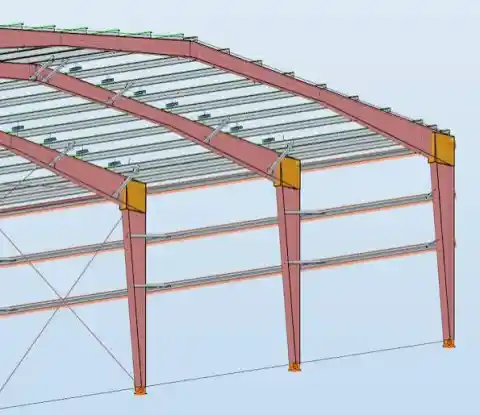
Earthquakes kill people — not because the ground shakes, but because buildings fall. Every major seismic event in history has reinforced one lesson: structures designed with modern seismic principles survive; those without them collapse. Whether you are designing a hospital in a high-seismicity zone or a modest residential structure in a moderate-risk area, understanding seismic design is a professional and moral obligation.
This guide walks you through the complete seismic design process — from hazard assessment to foundation detailing — using current codes (ASCE 7-22, IBC 2021, AASHTO LRFD, Eurocode 8), real formulas, worked references, and practical engineering tips.
🏗️ SEISMIC DESIGN WORKFLOW
Assessment
Classification
Spectrum
Classification
Selection
Design
Ductility
Design
1. What is Seismic Design?
Seismic design — also called earthquake engineering — is the discipline of designing structures to withstand ground motion caused by earthquakes. The goal is not to build an indestructible structure (that would be uneconomical), but to design for life safety, damage control, and where required, immediate occupancy after a design-level event.
Modern codes use a performance-based philosophy with multiple hazard levels:
- Frequent / Serviceability Earthquake (50% probability of exceedance in 50 years, ~72-year return period): Structure remains essentially elastic — no significant damage.
- Design Basis Earthquake (DBE) — 10% in 50 years, ~475-year return): Moderate damage acceptable; life safety maintained.
- Maximum Considered Earthquake (MCE) — 2% in 50 years, ~2,475-year return): Severe damage; collapse prevention required.
2. Why Seismic Design Matters
3. Codes & Standards
Seismic design worldwide is governed by national and regional codes. As a structural engineer, you must work within the applicable jurisdiction's code. Here are the major ones:
| Code / Standard | Region | Current Edition | Key Feature |
|---|---|---|---|
| ASCE 7-22 | USA | 2022 | Risk-targeted ground motions (MCER), SDC A–F |
| IBC 2021 | USA (Building Code) | 2021 | References ASCE 7-16/22 for seismic provisions |
| Eurocode 8 (EN 1998) | Europe | EN 1998-1:2004 (rev. 2025) | PGA-based spectrum, ductility classes DCL/DCM/DCH |
| AASHTO LRFD | USA (Bridges) | 9th Edition, 2020 | MCE/Frequent event, SDAP A–E |
| NZS 1170.5 | New Zealand | 2004 (Amend. 2016) | Hazard factor Z, ductility factor μ |
| IS 1893 | India | Part 1: 2016 | Zone factor Z, importance factor I, response reduction R |
| GB 50011 | China | 2010 (rev. 2016) | Intensity-based hazard, performance levels |
4. Step 1 — Seismic Hazard Assessment
The first step is quantifying how much ground motion your site will experience. This is defined by spectral acceleration values obtained from seismic hazard maps.
In ASCE 7-22, risk-targeted maximum considered earthquake (MCER) ground motion parameters are:
- SS — Short-period (0.2 s) spectral acceleration (%g), from USGS hazard maps
- S1 — 1-second period spectral acceleration (%g), from USGS hazard maps
These are read from maps or obtained from the USGS Seismic Design Tool by entering the site latitude and longitude. For bridge design (AASHTO), the same USGS maps are used with a 3% in 75-year probability of exceedance for the MCE event.
5. Step 2 — Site Classification
Soil conditions dramatically amplify or de-amplify ground motion. ASCE 7-22 classifies sites into six categories based on average shear wave velocity (v̄s), SPT blow count (N̄), or undrained shear strength (s̄u) in the top 30 m (100 ft):
| Site Class | Description | v̄s (m/s) | N̄ (blows/ft) | Amplification Effect |
|---|---|---|---|---|
| A | Hard Rock | >1,500 | N/A | De-amplifies |
| B | Rock | 760–1,500 | N/A | Slight amplification |
| C | Very Dense Soil / Soft Rock | 360–760 | >50 | Moderate amplification |
| D | Stiff Soil (Default if unknown) | 180–360 | 15–50 | Significant amplification |
| E | Soft Clay | <180 | <15 | ⚠️ High amplification — site-specific study often required |
| F | Special Soils (liquefiable, peats, sensitive clays) | — | — | ⛔ Site-specific ground response analysis REQUIRED |
Site amplification factors Fa (short-period) and Fv (long-period) are then applied to get design spectral parameters:
6. Step 3 — Design Response Spectrum (DRS)
The Design Response Spectrum is the fundamental tool for seismic analysis. It defines the spectral acceleration demand Sa at any period T for a 5% damped SDOF system.
The spectrum equations (ASCE 7-22 §11.4.5):
7. Step 4 — Seismic Design Category (SDC)
The Seismic Design Category (SDC) is determined from SDS, SD1, and the Risk Category (I–IV) of the building. It governs which analysis methods, systems, and detailing requirements apply.
| SDC | SDS (Risk Cat. I/II/III) | Typical Application | Analysis Required |
|---|---|---|---|
| A | < 0.167g | Low seismicity | Minimal — connection forces only |
| B | 0.167 – 0.33g | Moderate seismicity | ELF permitted |
| C | 0.33 – 0.50g | Moderate-high seismicity | ELF or modal; some restrictions |
| D | 0.50 – 0.833g | High seismicity | Modal or ELF; ductile detailing required |
| E/F | > 0.833g | Very high seismicity (near fault) | Modal analysis; special systems only |
8. Step 5 — Structural System Selection
The three fundamental earthquake-resisting systems are:
🏢 Moment Frames
Resist lateral forces through bending of beams and columns. Classified as SMF (Special), IMF (Intermediate), or OMF (Ordinary). R = 3–8.
🛡️ Shear Walls / Braced Frames
Stiff lateral systems with high strength. Concrete/masonry shear walls, steel SCBF/OCBF/EBF. R = 5–8.
🔄 Dual Systems
Combination of moment frame + shear wall/braced frame. The frame must carry ≥25% of the total seismic force. R = up to 8.
The Response Modification Factor (R) is fundamental. It represents the expected ductility and overstrength of the system:
9. Step 6 — Analysis Methods
ASCE 7-22 permits four analysis procedures, increasing in rigor:
- Equivalent Lateral Force (ELF) — §12.8: Simplified static procedure. Permitted for most regular structures in SDC B–D. Base shear V is distributed vertically as a triangular load.
- Modal Response Spectrum Analysis (MRSA) — §12.9.1: Uses the DRS and CQC combination of modes. Required for irregular structures in SDC D–F or tall buildings.
- Linear Response History Analysis — §12.9.2: Time-history analysis with modal superposition. At least 3 ground motion records required; 7 if mean is used.
- Nonlinear Response History Analysis (NLRHA) — Ch. 16: Full nonlinear time-history. Used for performance-based design, base isolation, and tall buildings. Minimum 11 record pairs.
10. Step 7 — Base Shear & Lateral Force Distribution
10.1 Equivalent Lateral Force Procedure (ASCE 7-22 §12.8)
The seismic base shear V is the total horizontal force the structure must resist:
10.2 Vertical Distribution of Forces (§12.8.3)
The base shear V is distributed to each floor level x as a lateral force Fx:
10.3 Worked Example: ELF Base Shear
Given:
- 5-story RC Special Moment Frame, SDC D
- SDS = 0.9g, SD1 = 0.5g, TL = 8 s
- T = 0.7 s (from §12.8.2: Ct = 0.0466, x = 0.9, hn = 18 m)
- Seismic Weight W = 3,500 kN, Ie = 1.0, R = 8
Solution:
C_s = 0.9 / (8/1.0) = 0.1125
C_s (upper limit) = 0.5 / [0.7 × (8/1.0)] = 0.0893 ← governs
C_s (min) = 0.044 × 0.9 × 1.0 = 0.0396 < 0.0893 ✓
V = 0.0893 × 3,500 = 312.6 kN
11. Step 8 — Detailing & Ductility
Detailing is where seismic design is won or lost. A structure may be correctly sized but still fail catastrophically if poorly detailed. Ductility — the ability to deform without loss of strength — is achieved through specific reinforcement and connection details.
11.1 Concrete Special Moment Frame (SMF) Detailing — ACI 318-19 Ch. 18
- Strong Column / Weak Beam: ΣMnc ≥ 1.2 × ΣMnb at every joint
- Confinement reinforcement: Closed hoops in plastic hinge zones at spacing ≤ min(d/4, 6db, so, 150 mm)
- Minimum longitudinal reinforcement: ρ ≥ 0.01 and ≤ 0.04 in columns
- Lap splices: Not permitted in plastic hinge zones; use mechanical couplers
- Beam-column joint: Shear must be carried by confinement hoops through the joint
11.2 Steel Special Moment Frame (SMF) Detailing — AISC 341-22
- Prequalified connections: RBS (Reduced Beam Section), WUF-W, BFP, etc.
- Panel zone: Doubler plates if thickness requirement not met: tpz ≥ (dz + wz)/90
- Continuity plates: Required unless column flanges are thick enough to resist beam flange forces
- Protected zone: No attachments within the expected plastic hinge region
12. Step 9 — Foundation Design for Seismic Loads
Foundations must be capable of transferring the overstrength seismic forces (using Ω₀) from the SFRS to the ground. Key considerations:
- Overstrength Factor: Foundation elements receiving seismic forces from columns or walls must be designed for Em = Ω₀ × QE ± 0.2SDSD (ASCE 7-22 §12.4.3)
- Liquefaction: Site Class F or liquefiable sites require site-specific ground response analysis and liquefaction mitigation (ground improvement, deep foundations)
- Pile foundations: In SDC C–F, concrete piles must have confinement reinforcement through potential hinge zones (top 7 pile diameters minimum)
- Grade beams: Required in SDC D–F between isolated footings to resist horizontal seismic forces
From the MCEER/ATC-49-2 design examples (AASHTO LRFD seismic bridge design), the seismic design of 24-inch CIP concrete piles with steel casings in liquefiable ground required detailed pushover analysis of the pile-soil system, with liquefaction-adjusted p-y curves for the liquefiable sand layers.
13. Quick-Reference Design Tables
Table A — Importance Factors (ASCE 7-22 Table 1.5-2)
| Risk Category | Building Type | Ie |
|---|---|---|
| I | Storage, agriculture, minor occupancy | 1.00 |
| II | Typical buildings (residential, commercial) | 1.00 |
| III | High-occupancy (schools, jails >300 persons) | 1.25 |
| IV | Essential facilities (hospitals, emergency ops) | 1.50 |
Table B — Approximate Period Parameters (ASCE 7-22 Table 12.8-2)
| Structural System | Ct | x |
|---|---|---|
| Steel moment-resisting frames | 0.0724 | 0.8 |
| Concrete moment-resisting frames | 0.0466 | 0.9 |
| Steel eccentrically braced frames | 0.0731 | 0.75 |
| All other structural systems | 0.0488 | 0.75 |
Ta = Ct × hnx, where hn is in metres. Must not exceed CuTa (ASCE 7-22 Table 12.8-1)
14. Tips, Facts & Common Mistakes
✅ Top 5 Design Tips
- Always run both X and Y directions with 5% accidental eccentricity — torsion governs many designs.
- Use rigid diaphragm assumption only if confirmed; flexible diaphragms (timber, metal deck) require careful load path tracing.
- Check P-Δ stability (stability coefficient θ < 0.10 or < θmax) — it often controls tall or flexible buildings.
- In SDC D–F, verify drift limits — story drift Δ ≤ 0.020hsx (Risk Cat. I/II) or 0.015hsx (Risk Cat. III/IV).
- Run modal analysis to confirm at least 90% mass participation — truncated modes cause underdesign.
❌ Common Mistakes to Avoid
- Using 90° hooks instead of seismic 135° hooks on confinement reinforcement.
- Ignoring vertical seismic effects (0.2SDSD) on cantilevers, long-span beams, and pre-stressed members.
- Designing with R factor but not verifying system is permitted in that SDC per ASCE 7-22 Table 12.2-1.
- Forgetting to include non-structural component seismic design (§13) — cladding and MEP anchoring failures cause significant losses.
- Using the Equivalent Lateral Force method on structures with vertical irregularities in SDC D–F.
🧮 Quick Design Checker
Use these quick sanity checks during design:
- V/W ratio should typically be 5–15% for low-to-moderate seismicity, and can reach 25%+ in high seismic zones with low R systems
- Fundamental period T ≈ 0.1N (N = number of stories) is a rough rule-of-thumb check
- For RC frames: beam-column joint shear stress should not exceed √f'c (in psi) ≈ 0.083√f'c (in MPa)
- Drift amplification: real drift = Cd × elastic drift / Ie
15. References & Further Reading
- ASCE/SEI 7-22 — Minimum Design Loads and Associated Criteria for Buildings and Other Structures. American Society of Civil Engineers, 2022.
- IBC 2021 — International Building Code. International Code Council, 2021.
- ACI 318-19 — Building Code Requirements for Structural Concrete. American Concrete Institute, 2019.
- AISC 341-22 — Seismic Provisions for Structural Steel Buildings. American Institute of Steel Construction, 2022.
- AASHTO LRFD Bridge Design Specifications, 9th Ed. American Association of State Highway and Transportation Officials, 2020.
- MCEER/ATC-49-2 — Design Examples: Recommended LRFD Guidelines for the Seismic Design of Highway Bridges. ATC/MCEER Joint Venture, 2003. (Source document for worked examples in this article.)
- EN 1998-1:2004 — Eurocode 8: Design of Structures for Earthquake Resistance. European Committee for Standardization.
- FEMA P-1050 — NEHRP Recommended Seismic Provisions. Federal Emergency Management Agency, 2020.
- Chopra, A.K. — Dynamics of Structures: Theory and Applications to Earthquake Engineering, 5th Ed. Pearson, 2016.
- USGS Seismic Design Geodata Tool: https://earthquake.usgs.gov/designmaps/
This article is intended as an educational resource for structural engineering professionals. All design must be performed by a licensed engineer and verified against the applicable code and jurisdiction requirements. Design values and parameters should be confirmed from the original code documents.