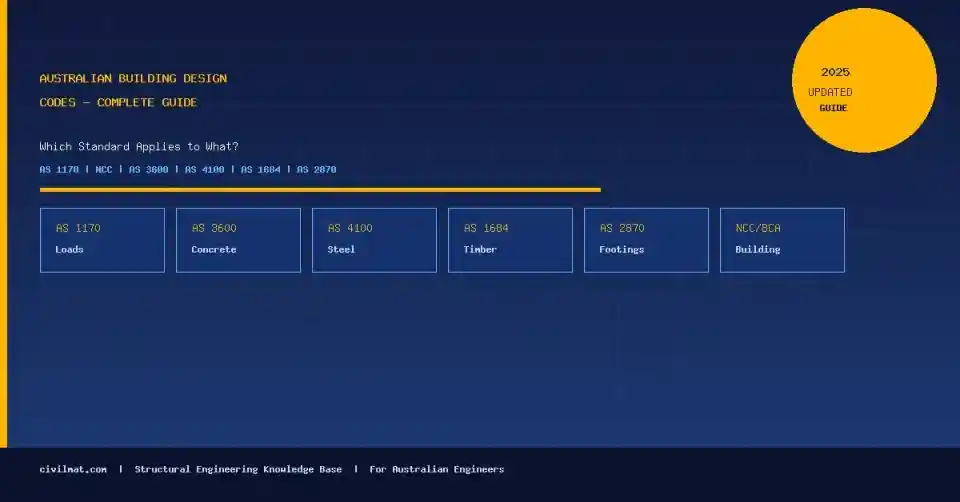
Australian Building Design Codes: Which Standard Applies to What?
Your definitive reference for AS 1170, NCC, AS 3600, AS 4100, AS 1684, AS 2870 and more
1. Introduction — Why Australian Building Codes Matter
If you are a structural engineer, architect, builder, or building certifier working in Australia, navigating the web of Australian Standards and the National Construction Code (NCC) is a daily reality. Knowing which code applies to which design task saves time, reduces errors, and ensures your designs are legally compliant and structurally safe.
Australia operates a layered code system: the NCC sits at the top as legislation, while Australian Standards (AS) and joint Australian/New Zealand Standards (AS/NZS) provide the technical detail. This article is your single-stop guide to understanding which standard governs which part of building design.
Australia has over 7,000 active Australian Standards. For structural engineering alone, more than 40 standards are commonly referenced in typical building design projects.
2. The Australian Code Hierarchy
The Australian regulatory framework for building design follows a clear top-down hierarchy. Understanding this structure is fundamental before diving into individual codes:
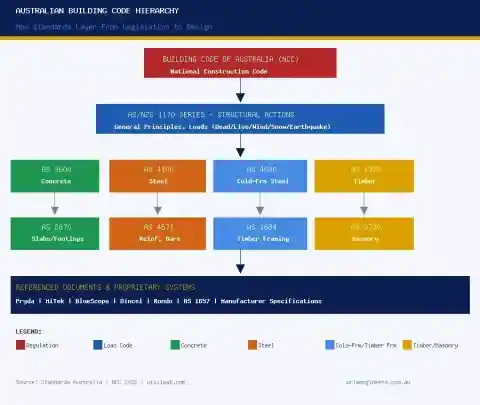
Figure 1: Australian building code hierarchy from legislation to proprietary specifications
| Level | Document | Authority | Role |
|---|---|---|---|
| 1 | NCC / BCA | ABCB | National minimum performance requirements |
| 2 | AS/NZS 1170 Series | Standards Australia | Structural loads and actions |
| 3 | Material Codes (AS 3600, AS 4100, AS 1720…) | Standards Australia | Material-specific structural design rules |
| 4 | Component Codes (AS 2870, AS 1684…) | Standards Australia | Specific elements (footings, framing) |
| 5 | Proprietary / Manufacturer Specs | Manufacturers | Product-specific design tables |
3. NCC / Building Code of Australia (BCA)
The National Construction Code (NCC), also known as the Building Code of Australia (BCA) for buildings, is the overarching legislative instrument. It sets performance requirements — not prescriptive methods — meaning there are multiple compliance pathways.
Class 2–9 buildings (commercial, multi-res, public)
Class 1 & 10 (houses, garages, outbuildings)
Plumbing and drainage code
4. AS/NZS 1170 Series — Structural Actions (Loads)
The AS/NZS 1170 series is the backbone of all structural design in Australia. It defines every type of load (action) that must be considered. No matter what material you are designing with — concrete, steel, or timber — you always start here for your load values.
| Standard | Title | Key Scope |
|---|---|---|
| AS/NZS 1170.0:2002 | General Principles | Load combinations, reliability, limit states, annual probability of exceedance |
| AS/NZS 1170.1:2002 | Permanent, Imposed & Other Actions | Dead loads, live loads by occupancy, roof loads, partition loads, unit weights |
| AS/NZS 1170.2:2021 | Wind Actions | Wind regions A–D, wind speed, pressure coefficients, shielding |
| AS/NZS 1170.3:2003 | Snow & Ice Actions | Alpine and sub-alpine regions (ACT, VIC, NSW highlands) |
| AS 1170.4:2007 | Earthquake Actions | Seismic hazard factor, earthquake design categories, ductility |
Dead Load (Permanent Action G) — Key Values from AS/NZS 1170.1 Appendix A
| Building Element | Load (kN/m²) | Notes |
|---|---|---|
| Concrete (reinforced) | 24.0 kN/m³ | Add 0.6 per 1% steel by volume |
| Steel | 76.9 kN/m³ | Unit weight, Table A1 |
| Terracotta roof tiles | 0.57 kN/m² | French pattern, Table A2 |
| Concrete roof tiles | 0.53 kN/m² | Table A2 |
| Steel sheet (per mm thickness) | 0.08 kN/m² | Galvanised flat |
| Brick masonry (per 10mm) | 0.19 kN/m² | Burnt clay, excludes render |
| Gypsum plaster (13mm) | 0.13 kN/m² | Ceiling lining |
| Movable partitions (minimum) | 0.5 kN/m² | UDL over floor area, Clause 2.3 |
5. AS 3600 — Concrete Structures
AS 3600 is the primary standard for the design of reinforced and prestressed concrete structures in Australia. The current edition is AS 3600:2018 (incorporating Amendment 1).
It covers beams, slabs, columns, walls, footings, and connections in concrete. It is used for everything from house slabs to multi-storey concrete frames.
| Section | Topic |
|---|---|
| Sect. 3 | Design requirements & robustness |
| Sect. 5 | Bending, shear, torsion & axial capacity of beams/slabs |
| Sect. 10 | Slabs — one-way and two-way |
| Sect. 11 | Columns and walls |
| Sect. 14 | Footings and piles |
| Sect. 18 | Exposure classification & durability |
6. AS 4100 — Steel Structures
AS 4100:2020 (latest edition) governs the design of steel structures including beams, columns, connections, and bracing systems. It applies to hot-rolled and welded open sections, hollow sections, and plate girders.
Bending, shear, compression, tension, combined actions
Bolted and welded joints, gusset plates, base plates
Buckling, lateral torsional buckling, restraint categories
7. AS 1684 & AS 1720 — Timber Design
| Standard | Title | Application |
|---|---|---|
| AS 1684.2 | Residential Timber-Framed Construction — Non-Cyclonic | Most of Australia (Wind Regions A & B) |
| AS 1684.3 | Residential Timber-Framed Construction — Cyclonic | QLD, WA, NT tropical coastal (Wind Regions C & D) |
| AS 1720.1 | Timber Structures — Design Methods | Commercial timber, engineering design of timber members |
| AS 1720.3 | Timber Structures — Residential Buildings | Design criteria specific to residential timber-framed buildings |
8. AS 2870 — Residential Slabs & Footings
AS 2870:2011 is unique to Australia — it specifically addresses foundation design on reactive soils (expansive clays common across much of Melbourne, Adelaide, Brisbane, and regional areas). It classifies sites into reactivity classes and prescribes slab and footing types accordingly.
| Site Class | Ys (mm) | Soil Description | Typical Footing |
|---|---|---|---|
| A | <10 | Sand, rock, non-reactive clay | Simple slab or strip |
| S | 10–20 | Slightly reactive clay | Stiffened raft |
| M | 20–40 | Moderately reactive clay | Deeper stiffened raft |
| H1 | 40–60 | Highly reactive | Waffle/deep slab |
| H2 | 60–75 | Highly reactive | Waffle or pier & beam |
| E | >75 | Extremely reactive | Pier & beam (engineer design) |
9. AS 3700 — Masonry Structures
AS 3700:2018 covers both unreinforced and reinforced masonry (brick, block, stone). It is used for structural walls, retaining walls, and freestanding walls. Key design checks include:
- Compressive capacity of masonry piers and walls
- Out-of-plane bending (wind, earthquake)
- In-plane shear (lateral loads)
- Lintel design over openings
- Connection of masonry walls to floors and roofs
10. AS 4600 — Cold-Formed Steel
AS 4600:2018 covers light gauge cold-formed steel sections used in residential and light commercial framing — purlins, girts, studs, and track. It is the relevant standard when using proprietary framing systems like Rondo, Canam, or similar light steel products.
11. Quick Reference — Which Code for Which Building Element
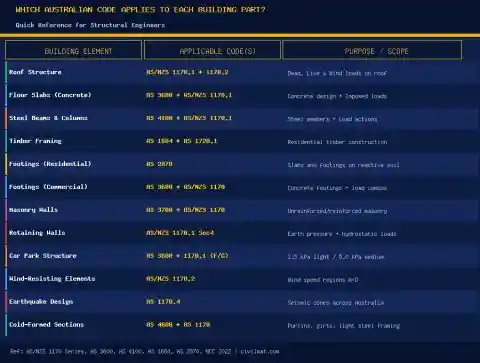
Figure 2: Quick reference — applicable Australian codes for common building elements
| Building Element | Primary Code(s) | Load Code | Key Design Check |
|---|---|---|---|
| Roof (metal deck) | AS 4600 | 1170.1 + 1170.2 | UDL 0.25 kPa + wind uplift |
| Concrete Flat Slab | AS 3600 | 1170.0 + 1170.1 | Punching shear, deflection |
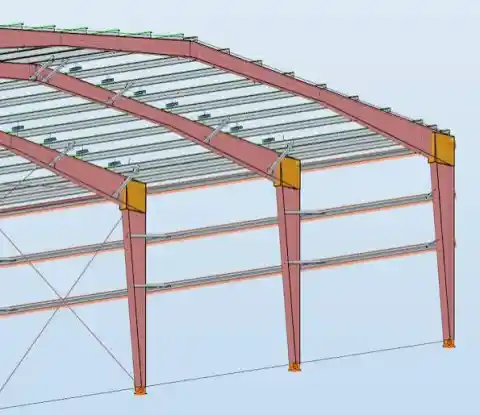
| Steel Portal Frame | AS 4100 | 1170.1 + 1170.2 + 1170.4 | Lateral torsional buckling |
| Timber Roof Trusses | AS 1720.1 / Proprietary | 1170.1 (R2 roof) | 0.25 kPa UDL + 1.1 kN point load |
| Residential House Slab | AS 2870 | 1170.1 | Reactive soil classification (A–E) |
| Brick Veneer Wall | AS 3700 | 1170.1 + 1170.2 | Wall ties, slenderness |
| Balustrades | AS/NZS 1170.1 Table 3.3 | 1170.1 | Min 0.75–3.0 kN/m line load |
| Retaining Wall | AS 3600 or AS 3700 | 1170.1 Sect 4.5 | Earth pressure + surcharge |
12. Pro Tips for Using Australian Codes
Before any design, establish your load combinations from AS/NZS 1170.0. The load combination 1.2G + 1.5Q governs most strength limit state checks for gravity-dominated structures.
Many codes have been reissued with amendments (e.g., AS/NZS 1170.1 includes Amendments 1 & 2). Always check you have the most current version including all amendments — the amendment may change a key table or clause.
Residential timber framing under 8.5m height → AS 1684. Commercial or engineered timber → AS 1720. Residential concrete footings on reactive soil → AS 2870. Commercial pad footings → AS 3600 Section 14. Don't cross-apply.
If your project is in Wind Region A or B (most of southern Australia) → AS 1684.2. Cyclonic regions C or D (north QLD, WA Pilbara, NT) → AS 1684.3. Using the wrong part is a critical error.
AS/NZS 1170.1 Clause 3.4.2 allows reduction of floor imposed loads for large tributary areas. The factor ψa = A⁰·³³/0 (min 0.5) can significantly reduce design loads for large floor areas — a useful tool for economical design of columns and foundations.
13. Key Facts & Figures
14. Frequently Asked Questions
📚 Related Articles
15. References
- Standards Australia. AS/NZS 1170.1:2002 — Structural Design Actions: Permanent, Imposed and Other Actions (incorporating Amendments 1 & 2). Standards Australia, Sydney.
- Standards Australia. AS/NZS 1170.0:2002 — Structural Design Actions: General Principles. Standards Australia, Sydney.
- Standards Australia. AS/NZS 1170.2:2021 — Structural Design Actions: Wind Actions. Standards Australia, Sydney.
- Standards Australia. AS 1170.4:2007 — Structural Design Actions: Earthquake Actions in Australia. Standards Australia, Sydney.
- Standards Australia. AS 3600:2018 — Concrete Structures (incorporating Amendment 1). Standards Australia, Sydney.
- Standards Australia. AS 4100:2020 — Steel Structures. Standards Australia, Sydney.
- Standards Australia. AS 1684.2:2021 — Residential Timber-Framed Construction (Non-Cyclonic). Standards Australia, Sydney.
- Standards Australia. AS 1720.1:2010 — Timber Structures: Design Methods. Standards Australia, Sydney.
- Standards Australia. AS 2870:2011 — Residential Slabs and Footings. Standards Australia, Sydney.
- Standards Australia. AS 3700:2018 — Masonry Structures. Standards Australia, Sydney.
- Standards Australia. AS 4600:2018 — Cold-Formed Steel Structures. Standards Australia, Sydney.
- Australian Building Codes Board. National Construction Code (NCC) 2022. ABCB, Canberra. Available at: ncc.abcb.gov.au
Expand Your Structural Engineering Knowledge
Explore more guides, code references, and structural engineering resources on Civilmat.
Browse Structural Design Articles →
How to download this article?