

Answer in 60 words: Structural Health Monitoring (SHM) is a continuous, sensor-based system that measures the real-time response of civil infrastructure — bridges, buildings, dams and towers — and automatically detects damage before it becomes catastrophic. Using accelerometers, strain gauges and fibre-optic sensors networked through wireless IoT, SHM feeds signal-processing algorithms that flag frequency shifts, stiffness loss and crack propagation, giving engineers actionable data to schedule targeted maintenance.
With over 600,000 structurally deficient bridges in the US alone (ASCE 2023 Report Card) and a global infrastructure maintenance backlog exceeding $1 trillion, the industry can no longer rely on visual inspections every 2–5 years. A single missed fatigue crack in a welded steel girder, or a 5% drop in the first natural frequency of a reinforced concrete bridge, can mean the difference between a safe structure and a collapse. SHM closes that gap — in real time.
This guide is written from a structural engineering perspective, grounded in actual code references (ISO 13822, EN 1337, AASHTO LRFD, AS 3600), real sensor specifications, and published damage-detection algorithms. Whether you are specifying an SHM system for a cable-stayed bridge, retrofitting a heritage building, or studying for a structural assessment exam, you will find actionable, technical depth here — not marketing copy.
- What Is Structural Health Monitoring?
- Why SHM Matters: The Cost of Ignorance
- SHM System Architecture — 4 Layers Explained
- Sensor Types, Specifications & Selection Guide
- Damage Detection Methods & Algorithms
- Operational Modal Analysis (OMA) — Deep Dive
- SHM Codes, Standards & Guidelines
- SHM for Bridges — Complete Technical Walkthrough
- SHM for Buildings & High-Rise Structures
- Digital Twins & BIM Integration
- Maintenance Strategies: From Reactive to Predictive
- Cost Analysis & ROI of SHM Systems
- Top SHM Software & Platforms Compared
- Real-World Case Studies & Lessons Learned
- FAQs — Engineer-Focused Q&A
- Conclusion & Next Steps
1. What Is Structural Health Monitoring?
Structural Health Monitoring is the process of implementing a damage identification strategy for civil, aerospace and mechanical infrastructure. At its core, SHM answers four sequential questions defined by Rytter (1993) — a taxonomy that every structural engineer should memorise:
| Level | Question Answered | Output | Method Example |
|---|---|---|---|
| 1 — Detection | Is damage present? | Yes / No flag | Frequency shift >3% |
| 2 — Localisation | Where is the damage? | Node location, span ID | COMAC index, strain mapping |
| 3 — Classification | What type of damage? | Crack, corrosion, delamination | ML classifier, AE pattern |
| 4 — Severity | How serious is it? | Damage index, RUL estimate | Stiffness reduction ratio |
| 5 — Prognosis | How long is it safe? | Remaining Useful Life (RUL) | Paris Law fatigue model |
Most commercial SHM platforms today reliably achieve Levels 1–2. Level 3–5 require physics-based models or trained machine learning classifiers calibrated to the specific structure. The distinction matters enormously when writing SHM specifications — clients often assume a sensor system delivers prognosis out of the box. It does not, without significant engineering input.
2. Why SHM Matters: The Cost of Ignorance
⚠️ CANDID INSIDER INSIGHT — The Inspection Gap
In most jurisdictions, major bridges are inspected visually every 24 months at best. A fatigue crack growing at 0.1 mm/day in a welded stringer can propagate from sub-critical (5 mm) to critical (25 mm) in less than 200 days — entirely between inspections. The visual inspector, working from a snooper truck 10 metres below a deck soffit, cannot reliably detect cracks under 2 mm width without magnification. SHM does not replace inspectors — it tells them exactly where to look and when to go.
The economics are compelling. A typical SHM installation on a medium-span highway bridge costs $80,000–$350,000 for hardware, installation and 3-year monitoring. Emergency repairs after an undetected failure typically run $2M–$15M, plus traffic disruption costing millions more per day of closure. The benefit-cost ratio of SHM on critical infrastructure routinely exceeds 8:1 according to NCHRP Report 683.
3. SHM System Architecture — 4 Layers Explained
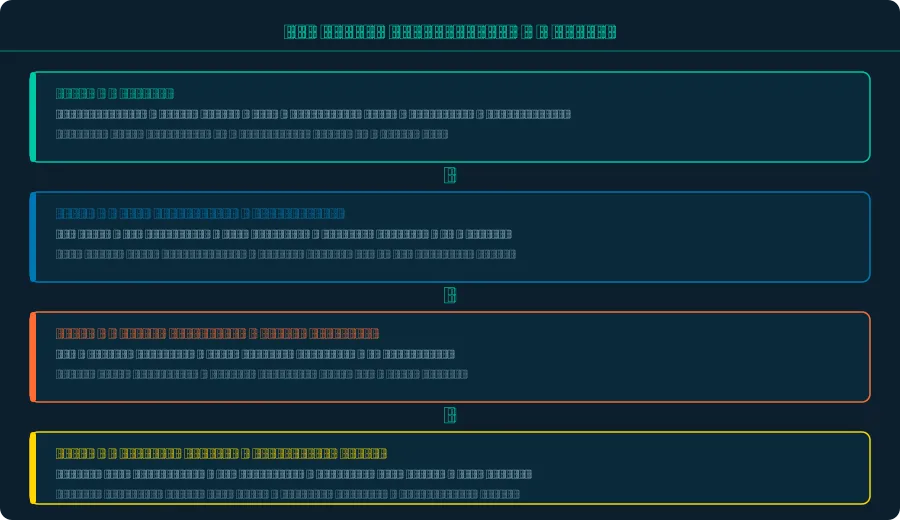
A production-grade SHM system is not a collection of sensors plugged into a laptop. It is a four-layer engineering system, each layer with distinct performance requirements, failure modes and maintenance schedules.
Layer 1 — Sensing
The sensing layer converts physical quantities (acceleration, strain, displacement, temperature, corrosion potential) into measurable electrical or optical signals. Key specifications an engineer must define at this stage include sampling frequency fs, dynamic range, resolution and environmental rating. For vibration-based SHM, the Nyquist criterion mandates:
Where fmax = highest modal frequency of interest. For bridges: typically 0–50 Hz → fs ≥ 100 Hz minimum. For high-frequency crack AE detection: fs up to 1 MHz.
Layer 2 — Data Acquisition & Transmission
DAQ units digitise analogue signals via ADC converters (typically 16–24 bit resolution) and transmit data to a central server or edge compute node. Wireless protocols for SHM include LoRaWAN (long range, low power, suitable for rural bridges), 5G NR (ultra-low latency for real-time control applications), and ZigBee / WirelessHART for dense industrial environments. Wired systems (Ethernet, fibre) remain the gold standard for permanent critical installations where data integrity cannot be compromised.
Layer 3 — Signal Processing & Damage Detection
Raw time-domain signals are transformed into feature vectors using Fast Fourier Transform (FFT), Short-Time Fourier Transform (STFT), or Continuous Wavelet Transform (CWT). Modal parameters — natural frequencies, mode shapes and damping ratios — are extracted and compared against a baseline (undamaged) state using damage-sensitive features. The Modal Assurance Criterion (MAC) quantifies mode shape correlation:
MAC = 1.0 → perfect correlation (undamaged) · MAC < 0.90 → significant mode shape change → investigate · MAC < 0.80 → probable structural damage
Layer 4 — Decision Support
The top layer translates damage indicators into engineering decisions. This includes integration with digital twins (parametric FE models updated in real time), BIM platforms (Revit, Civil 3D) for maintenance work-order generation, and risk-scoring systems that assign priority levels based on consequence of failure. The output is a structured maintenance plan — not just a list of alerts. Without Layer 4, raw sensor data is operationally useless.
4. Sensor Types, Specifications & Selection Guide
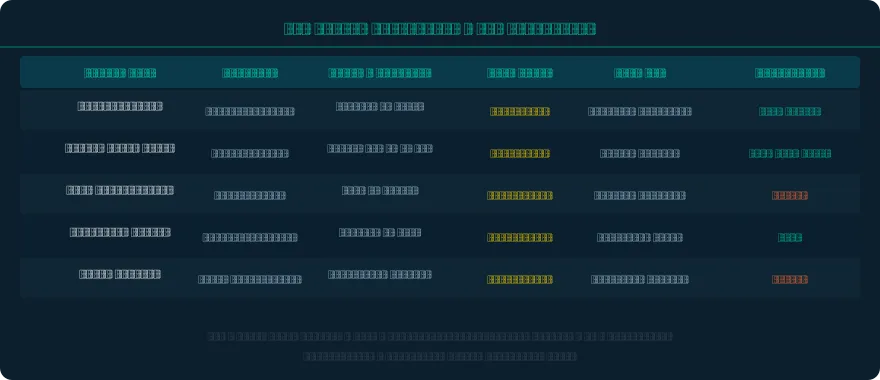
Sensor selection drives cost, data quality and system longevity. The wrong sensor in the wrong location produces misleading results that can be worse than no monitoring at all — a false sense of safety. Here is the engineering comparison every SHM specifier needs:
Fibre Bragg Grating (FBG) Sensors — Why They Are Changing SHM
FBG sensors are the fastest-growing technology in structural monitoring. A single optical fibre can embed hundreds of sensing points along its length, each measuring strain independently at sub-microstrain resolution. They are immune to electromagnetic interference — critical near power transmission lines or MRI facilities — and survive decades of outdoor exposure without recalibration. The wavelength shift relates to strain by:
Where: ΔλB = Bragg wavelength shift · pe = photo-elastic constant (~0.22 for silica) · ε = axial strain · αΛ = thermal expansion (~0.55×10⁻⁶/°C) · αn = thermo-optic coefficient (~8.6×10⁻⁶/°C) · ΔT = temperature change
Temperature compensation is mandatory — without it, a 10°C daily swing in an outdoor bridge will generate a false strain reading of approximately ±92 µε.
💡 Engineering Tip: Sensor Placement Rules
- Place accelerometers at anti-nodes of target mode shapes — never at nodes (zero-response points)
- Strain gauges on steel: align axis with principal stress direction; use rosettes for biaxial stress states
- FBG sensors on concrete: embed during pour or epoxy-bond with a stiff backing plate to ensure strain transfer efficiency >95%
- Tiltmeters: mount on rigid surfaces >100 mm from movement joints; temperature-compensate for spans >50 m
- Minimum sensor density for mode shape reconstruction: >2 sensors per half-wavelength of the highest target mode
5. Damage Detection Methods & Algorithms
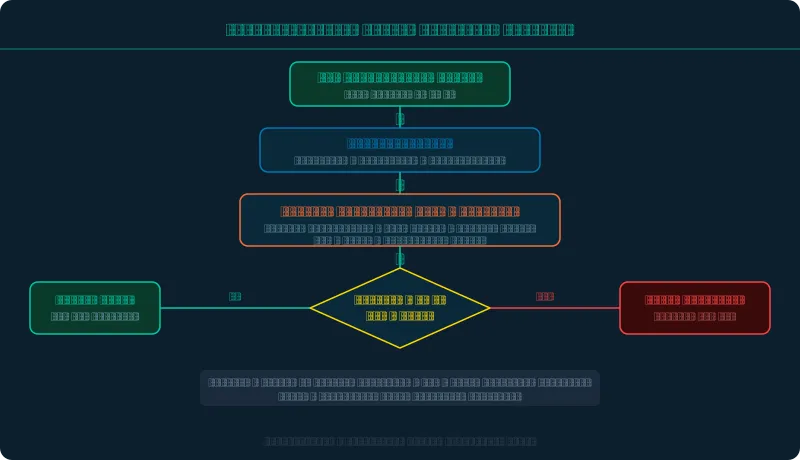
Damage detection in SHM is not a single algorithm — it is a hierarchy of increasingly sophisticated methods, each with different data requirements, computational cost and sensitivity. Understanding this hierarchy determines what a monitoring system can and cannot tell you.
Vibration-Based Methods
The most widely deployed damage detection approach exploits the relationship between structural stiffness and natural frequency. A stiffness reduction of Δk in any element changes the system natural frequency by approximately:
A 10% stiffness reduction → ~5% frequency drop. For a bridge with f₀ = 2.5 Hz, this produces a 0.125 Hz shift — measurable with a 15-minute ambient vibration record at fs = 200 Hz.
6. Operational Modal Analysis (OMA) — Deep Dive
Operational Modal Analysis is the backbone of ambient-vibration SHM — it extracts modal parameters using only output measurements (acceleration response to wind, traffic, machinery) without controlling or measuring the input excitation. This makes it the only practical method for large civil structures that cannot be shut down for controlled hammer tests.
The standard OMA workflow follows these steps: (1) acquire acceleration time histories at all sensor locations simultaneously; (2) compute power spectral density (PSD) matrices using Welch’s method; (3) apply frequency domain decomposition (FDD) or stochastic subspace identification (SSI) to extract natural frequencies, mode shapes and damping ratios; (4) track changes against a statistically validated baseline using control charts (Shewhart or CUSUM).
⚡ Key OMA Parameters — What to Report in a Monitoring Brief
| Parameter | Typical Value (Bridge) | Alert Threshold |
|---|---|---|
| 1st bending frequency f₁ | 1.5–4.0 Hz | Δf₁ > 3% sustained over 7 days |
| Damping ratio ζ | 0.5–2.0% (steel); 2–5% (RC) | Δζ > 50% relative change |
| MAC (baseline vs. current) | 0.97–1.00 (healthy) | MAC < 0.90 |
| Mid-span deflection | Span/800 live load limit | Persistent residual > 5 mm |
7. SHM Codes, Standards & Guidelines
SHM does not yet have a single unified international standard. Practice is guided by a patchwork of documents from different professional bodies. An engineer specifying an SHM system must navigate these carefully:
Notably, ISO 13822 is the closest thing to an international framework for incorporating monitoring data into structural reliability assessments. It allows SHM data to be used as site-specific evidence that can update the structural reliability index β — effectively making a monitored structure’s safety case stronger than one assessed purely from design calculations.
8. SHM for Bridges — Complete Technical Walkthrough
Bridges are the most monitored infrastructure asset globally — driven by high consequence of failure, significant traffic loads and the prevalence of fatigue-critical details. A complete bridge SHM specification addresses the following domains:
8.1 Global Response Monitoring
Objective: Track overall structural behaviour — deflection envelopes, load redistribution, bearing displacement and dynamic amplification factors (DAF). Instruments: LVDT arrays at bearing locations, GPS/GNSS for long-span global displacement, tiltmeters at pier caps.
The Dynamic Amplification Factor is monitored via strain gauges under controlled traffic loading:
AASHTO LRFD specifies DAF = 1.33 for short-span bridges. Measured DAF > 1.50 warrants investigation of bearing condition and approach slab roughness.
8.2 Fatigue Crack Monitoring
Welded steel bridges accumulate fatigue damage at Category C–E’ details (cover plate terminations, stiffener welds, flange-to-web welds). SHM uses strain-cycle counting via the Rainflow algorithm to compute cumulative fatigue damage index D per Miner’s Rule:
nᵢ = applied cycles at stress range Δσᵢ · Nᵢ = allowable cycles from S-N curve at Δσᵢ · Failure predicted when D ≥ 1.0 · AASHTO Category C: S-N curve knee point at 2×10⁶ cycles, Δσ = 69 MPa
Real-world SHM on the FHWA Long-Term Bridge Performance (LTBP) program has revealed that many bridges accumulate fatigue damage at 2–3× the design rate due to increased truck traffic and vehicle weights not anticipated in original design assumptions.
8.3 Corrosion Monitoring
For reinforced concrete bridges in aggressive environments (coastal, de-iced), embedded half-cell potential sensors and resistivity probes measure the electrochemical state of reinforcement continuously. The relationship between corrosion rate and half-cell potential follows:
| Half-Cell Potential (vs. CSE) | Corrosion Probability (ASTM C876) |
|---|---|
| > −200 mV | 90% probability of NO corrosion |
| −200 to −350 mV | Uncertain; further investigation required |
| < −350 mV | 90% probability of ACTIVE corrosion |
9. SHM for Buildings & High-Rise Structures
High-rise buildings present unique SHM challenges: floor-to-floor variations in stiffness, non-structural elements that contribute to lateral stiffness, and multiple structural systems (moment frames, shear walls, outriggers) acting together. Post-earthquake SHM is particularly critical — a structure may look undamaged externally while having sustained significant storey drift that permanently degrades its seismic performance.
For seismic performance monitoring, the key metric is the Maximum Inter-Storey Drift Ratio (MISDR), tracked via floor-level accelerometers and double-integrated to displacement:
u_i = lateral displacement of storey i · h_i = storey height · ASCE 7-22 limits: δ/h = 0.010 (Risk Cat. I) to δ/h = 0.007 (Risk Cat. IV)
10. Digital Twins & BIM Integration
A Digital Twin in the SHM context is a continuously updated finite element model whose parameters are adjusted in real time as sensor data streams in. Unlike a standard FE model built once at design stage and never revised, a digital twin reflects the actual as-built, as-deteriorated state of the structure at any given moment.
The model updating process uses Bayesian inference or Kalman filtering to identify stiffness parameters k that minimise the residual between measured frequencies f_measured and analytically predicted frequencies f_model(k):
λ·R(k) = regularisation term preventing overfitting to noisy measurements · k* = updated stiffness distribution identifying damage location and severity
The integration with BIM (Revit, OpenBIM via IFC schema) enables direct linkage of monitoring data to specific structural elements — a detected stiffness reduction in span 3 triggers a flagged element in the BIM model, generating a maintenance work order with GPS coordinates, element ID and recommended inspection checklist. This workflow is described in detail in the buildingSMART IFC SHM extension framework.
11. Maintenance Strategies: From Reactive to Predictive
The transition from scheduled to predictive maintenance is the primary economic justification for SHM investment. A Condition-Based Maintenance regime cuts unnecessary preventive interventions by an average of 30–40% while reducing unexpected failures by 70–80%, based on data from the US Department of Transportation infrastructure asset management studies.
12. Cost Analysis & ROI of SHM Systems
13. Top SHM Software & Platforms Compared
14. Real-World Case Studies & Lessons Learned
Case Study 1: Dongting Lake Bridge, China
One of the most extensively monitored cable-stayed bridges globally, the Dongting Lake Bridge (880 m main span) hosts over 600 sensors including FBG strain sensors, accelerometers, temperature sensors, wind anemometers and GPS receivers. The SHM system detected a 4.2% reduction in cable tension in stay-cable Group 7 over 18 months — attributed to anchor zone corrosion confirmed by follow-up inspection. Without the monitoring system, the next scheduled inspection was 14 months away. This is the clearest possible demonstration of SHM’s value: the system identified damage that had zero external visible indicators.
Case Study 2: I-35W Minneapolis Bridge (Failure Post-Mortem)
The 2007 collapse of the I-35W bridge — which killed 13 people — occurred at an undersized ½-inch gusset plate that had been in situ since 1967. Forensic analysis showed that the critical joint had been significantly overstressed by decades of increasing traffic loads and a construction surcharge added the day of collapse. Had an SHM system been monitoring girder strains at the gusset plate connections, the accumulated overstress — measurable as persistent strain readings 30–40% above design values — would have triggered investigation months before failure. The absence of monitoring was a contributing factor to 13 deaths. This case is the most powerful argument for mandatory SHM on fracture-critical bridges.
15. FAQs — Engineer-Focused Q&A
How many sensors do I need for a medium-span bridge?
For a typical 40–80 m simply-supported highway bridge targeting the first 3 bending and torsional modes, you need a minimum of 12–18 accelerometers (6–9 per chord, both sides), 4–8 strain gauges at mid-span and quarter-points of critical girders, 4 LVDTs at bearings, and 2 tiltmeters at pier caps. This gives sufficient spatial resolution for OMA and basic damage localisation. Add corrosion sensors in aggressive environments.
What sampling rate should I specify for bridge vibration monitoring?
For global modal analysis (0–20 Hz): minimum f_s = 100 Hz. For vehicle-induced dynamic response and fatigue cycle counting: f_s = 200–500 Hz. For acoustic emission crack detection: f_s = 100 kHz–1 MHz. Avoid over-specifying sampling rate — it drives storage costs exponentially. A 200 Hz, 16-bit, 20-channel system produces ~1.4 GB/day of raw data.
Can SHM replace physical bridge inspections?
No — and any vendor claiming otherwise should be challenged. SHM detects changes in structural response, not direct physical condition. Paint delamination, minor section loss, debris accumulation and bearing seizure may not register in vibration data until structurally significant. SHM and inspection are complementary: SHM tells you when and where to inspect, inspectors confirm what the condition actually is. The result is more targeted, effective and cost-efficient inspections — not the elimination of them.
How do I establish a valid baseline for SHM?
Best practice requires a minimum 6–12 months of continuous monitoring before declaring a baseline, to capture seasonal temperature variation (which changes natural frequencies by 2–8% for steel bridges), traffic pattern variation, and sensor drift. Statistical control limits (±3σ of modal parameters) should be set from this baseline period. Alert thresholds set from a single 2-week record will generate excessive false alarms — up to 40% false positive rate in temperate climates.
What is Remaining Useful Life (RUL) and how is it calculated?
RUL is the predicted service life remaining before a component or structure reaches a defined failure criterion. For fatigue-governed steel elements, RUL uses Paris Law crack growth integration: RUL = (a_crit^(1-m/2) − a_0^(1-m/2)) / ((1-m/2) · C · (ΔK)^m), where a_0 is current crack size from NDT, a_crit is critical crack size from fracture mechanics, and C, m are Paris Law constants from ASTM E647 material testing. SHM provides the stress intensity range ΔK input from continuous strain monitoring.
16. Conclusion & Next Steps
Structural Health Monitoring is no longer a research curiosity — it is a mature engineering discipline with established sensor technologies, validated algorithms, international guidelines and proven ROI. The question is not whether to monitor critical infrastructure, but how to design an SHM system that is technically rigorous, practically maintainable, and economically justified for the specific structure and risk context.
The core takeaways for practising structural engineers: define your monitoring objectives before selecting sensors; specify sampling rates based on target frequency content; establish a statistically robust baseline; integrate with digital twin models for maximum decision value; and never position SHM as a replacement for skilled engineering judgment — it is a tool that dramatically amplifies that judgment.
For engineers working on seismic design and structural assessment, our related articles on seismic design methodology and beam flexural analysis provide complementary depth on the structural behaviour concepts that underpin effective SHM interpretation.
STRUCTURAL ENGINEERING EXPERTISE
M. Haseeb Mohal
Graduate Structural Engineer · BZU Silver Medallist · Specialist in RC, Steel & SHM Systems
Available for international structural engineering projects — from SHM system specifications and structural assessments to seismic design and forensic investigation. Combining code-based rigour (AASHTO, AS 3600, Eurocode) with practical construction knowledge.
