
Structural Health Monitoring (SHM) is the process of implementing a damage-detection and characterisation strategy for engineering structures using an in-situ sensing system that continuously measures structural response, processes signals, and automatically flags anomalies — enabling engineers to shift from calendar-based inspection to evidence-based maintenance. In plain engineering terms: SHM replaces gut-feel inspection schedules with real data from sensors installed directly on your structure, operating 24 hours a day, 365 days a year.
The global SHM market is projected to reach $67 billion by 2030 (MarketsandMarkets, 2024), driven by ageing infrastructure, plummeting IoT hardware costs, and regulatory pressure on asset owners. More than 600,000 bridges in the United States alone are classified as structurally deficient or functionally obsolete (FHWA, 2023). Studies consistently show that SHM-informed maintenance programs reduce reactive repair costs by 25–35% and can extend asset service life by two to three decades. If you are a structural engineer making decisions on monitoring strategy, inspection planning, or maintenance budgets — this guide gives you the engineering depth to evaluate, specify, and implement an SHM system correctly.
1. What Is Structural Health Monitoring?
According to the widely cited definition in the structural engineering literature, SHM involves the observation of a system over time using periodically sampled dynamic response measurements from an array of sensors, the extraction of damage-sensitive features from these measurements, and the statistical analysis of these features to determine the current state of system health. See the Wikipedia overview of SHM for a concise introduction.
More operationally, SHM addresses four fundamental engineering questions in sequence:
- Is damage present? — Detection (Rytter Level 1)
- Where is the damage? — Localisation (Level 2)
- How severe is it? — Assessment (Level 3)
- How long before structural failure? — Prognosis and Remaining Useful Life (Level 4)
SHM sits at the intersection of structural engineering, signal processing, data science, and materials science. It is fundamentally different from periodic visual inspection: while a biennial bridge inspection captures what an inspector can see on a clear afternoon, SHM captures a 3% natural frequency shift at 02:47 during a winter storm — before visible cracking begins, before the structure has reached a state that any inspector could flag. That lead time — typically 6 to 18 months ahead of visible damage — is precisely where SHM generates its economic value.
2. Why SHM Matters: The Engineering Business Case
The economic and safety arguments for SHM are now overwhelming. The data below is drawn from ASCE Infrastructure Report Cards, FHWA statistics, and peer-reviewed SHM literature:
| Metric | Data Point | Source |
|---|---|---|
| US bridges — deficient or obsolete | 600,000+ classified as structurally deficient | FHWA, 2023 |
| US infrastructure maintenance backlog | USD $2.6 trillion in deferred maintenance | ASCE Infrastructure Report Card, 2021 |
| Maintenance cost reduction with SHM | 25–35% reduction in reactive repair costs | Farrar and Worden, 2012 |
| Early detection lead time | Detects damage 6–18 months before visual evidence | Lynch and Loh, 2006 |
| Global SHM market size by 2030 | USD $67 billion projected CAGR 14.8% | MarketsandMarkets, 2024 |
| ROI on SHM investment | $4–$8 return per $1 invested over 10-year horizon | Mims and Ghasemi, 2019 |
The FHWA bridge inspection program mandates routine inspection every 24 months — but inspection frequency alone cannot catch progressive damage developing between cycles. SHM fills this surveillance gap continuously. The ASCE Infrastructure Report Card gives US infrastructure an overall C– grade — a structural engineering indictment that makes the SHM investment case politically and financially compelling.
3. The 4-Layer SHM System Architecture
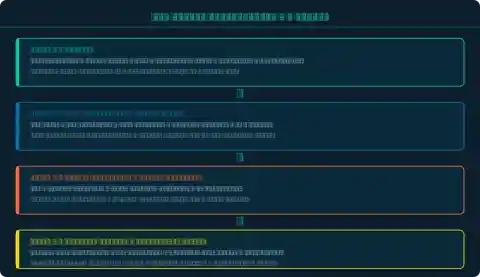
Every functional SHM system — whether monitoring a cable-stayed bridge or a 40-storey high-rise — follows the same four-layer hierarchy. Understanding this hierarchy before specifying hardware or software is non-negotiable: procurement decisions made without this framework typically result in expensive sensor arrays that generate uninterpretable data.
Layer 1: Sensing
Physical sensors convert structural response — acceleration, strain, displacement, tilt, crack opening — into electrical or optical signals. Sensor placement is governed by the Optimal Sensor Placement (OSP) problem: maximising information capture with the minimum viable sensor count. OSP algorithms such as the Effective Independence (EFI) method and MAC-based approaches identify locations where mode shapes exhibit maximum spatial resolution relative to the target damage scenarios.
Layer 2: Data Acquisition and Transmission
DAQ units digitise analogue signals via ADC converters (typically 16–24 bit resolution at 200–10,000 Hz sampling), apply GPS-synchronised time stamps (±1 µs accuracy for multi-channel coherence), and transmit over wired (Ethernet, fibre-optic) or wireless (LoRaWAN, 5G, ZigBee, NB-IoT) links. Edge computing nodes handle local pre-processing — only compressed feature vectors or anomaly flags are forwarded to the cloud, dramatically reducing bandwidth and storage requirements.
Layer 3: Signal Processing and Damage Detection
Raw acceleration time histories are transformed into the frequency domain via Fast Fourier Transform (FFT) or Short-Time Fourier Transform (STFT). Modal parameters — natural frequencies, mode shapes, damping ratios — are extracted using Operational Modal Analysis (OMA, for ambient vibration) or Experimental Modal Analysis (EMA, for forced excitation). Machine learning classifiers including Support Vector Machines, Random Forests, and Autoencoders then classify structural state against the calibrated baseline.
Layer 4: Decision Support
Processed damage indicators feed into engineering dashboards, BIM-linked Digital Twins, and automated maintenance management systems. When calibrated thresholds are exceeded, the system generates inspection work orders with location data, damage severity estimates, and recommended actions. Risk scoring algorithms prioritise maintenance expenditure by combining structural condition index with consequence-of-failure weighting.
For context on how artificial intelligence is transforming the Layer 4 decision engine, see our comprehensive guide on AI in Construction and Civil Engineering.
4. Sensor Types, Specifications and Selection Guide
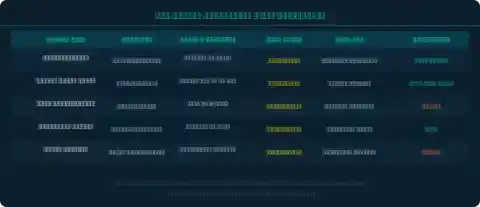
Sensor selection is the most consequential early decision in any SHM project. The wrong sensor type, resolution, or installation method will compromise the entire monitoring programme — no signal processing algorithm can correct for a fundamentally inadequate measurement. The comparison infographic below summarises the five primary sensor categories used in civil SHM.
4.1 Accelerometers (MEMS and Piezoelectric)
For ambient vibration monitoring of large civil structures, high-sensitivity MEMS accelerometers with a noise floor at or below 1 µg/√Hz are the standard choice. They capture wind-induced and traffic-induced vibrations without artificial excitation. Piezoelectric accelerometers are preferred for impulsive or high-frequency applications such as machine foundations and offshore jacket structures. Critical specification parameters: frequency range (typically DC to 100 Hz for bridges), sensitivity in mV/g, noise spectral density, and cross-axis sensitivity below 3%.
4.2 Fibre Bragg Grating (FBG) Sensors
FBG sensors represent the gold standard for long-term embedded strain monitoring in aggressive environments. A Bragg grating is photo-inscribed into single-mode optical fibre; applied strain shifts the reflected Bragg wavelength according to the following relationship:
ΔλB ⁄ λB = (1 − pe) · ε + (αΛ + ζ) · ΔT
Where: ΔλB = Bragg wavelength shift | λB = nominal Bragg wavelength (~1550 nm) | pe = photoelastic coefficient (~0.22 for silica) | ε = applied mechanical strain | αΛ = thermal expansion coefficient | ζ = thermo-optic coefficient | ΔT = temperature change
FBG advantages over conventional strain gauges include: complete immunity to electromagnetic interference, multiplexing capability (100+ sensors on a single fibre strand), long cable runs exceeding 40 km without signal amplification, and sub-microstrain resolution (±0.5 µε achievable). The primary disadvantage is interrogator cost ($10k–$50k per channel). For bridge deck or tunnel lining applications where sensors must be embedded in concrete during construction, FBG is the only sensor technology that offers reliable multi-decade performance.
4.3 Sensor Selection Decision Matrix
| Structure Type | Primary Sensor | Secondary Sensor | Key Monitored Parameter |
|---|---|---|---|
| Long-span bridge | MEMS Accelerometer | FBG Strain, LVDT | Natural frequencies, cable tension |
| High-rise building | Tri-axial Accelerometer | Tiltmeter | Inter-storey drift, torsional response |
| RC or prestressed beam | FBG Strain Gauge | Crack Monitor | Flexural strain distribution, crack width |
| Retaining wall or slope | MEMS Tiltmeter | LVDT, Piezometer | Inclination, pore water pressure |
| Offshore jacket platform | Piezoelectric Accelerometer | Corrosion Sensor | Fatigue accumulation, scour depth |
| Heritage masonry structure | Optical Crack Monitor | Low-frequency Accelerometer | Crack propagation rate, vibration level |
5. Vibration-Based Damage Detection: Workflow and Key Formulas
Vibration-based damage identification exploits the fundamental relationship between a structure's physical properties and its dynamic characteristics. Damage reduces local stiffness, which depresses natural frequencies and distorts mode shapes. These changes constitute the damage fingerprint that SHM algorithms are calibrated to detect.
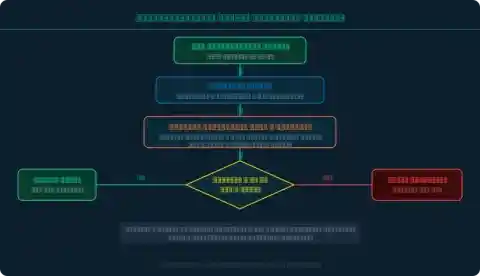
5.1 Natural Frequency Shift — Primary Damage Index
The natural frequency of a structural system is governed by its stiffness and mass. For a single-degree-of-freedom (SDOF) idealisation:
fn = ½π √(k⁄m)
Relative Frequency Shift (Damage Index):
Δf ⁄ f0 = (fdamaged − fbaseline) ⁄ fbaseline
Alert thresholds (typical practice): |Δf/f0| > 2% → Level 1 investigation | >3% → Mandatory inspection | >5% → Immediate structural review | Note: thresholds must be structure-specific and validated against the baseline period
5.2 Modal Assurance Criterion (MAC)
MAC quantifies the correlation between two mode shape vectors — typically a current measurement and the baseline reference. A MAC value of 1.0 indicates statistically identical mode shapes; values below 0.95 indicate a potential structural change requiring investigation:
MAC(φA, φB) = |φAT φB|² ⁄ (φAT φA · φBT φB)
Range: 0.0 (orthogonal vectors — major structural change) to 1.0 (identical vectors — undamaged baseline) | MAC < 0.95: flag for engineering review | MAC < 0.85: likely significant damage | MAC < 0.70: high probability of structural damage requiring inspection
5.3 Remaining Useful Life — Paris Law Fatigue Prognosis
The highest-value SHM output is prognosis: predicting how long before the structure reaches its limit state. For fatigue-critical steel structures (bridges, crane girders, offshore topsides), Paris Law crack growth combined with real-time SHM strain data provides the most reliable RUL estimate in engineering practice:
da⁄dN = C · (ΔK)m
Stress Intensity Factor Range:
ΔK = Δσ · √(πa) · F(a⁄W)
a = current crack length (mm) | N = fatigue load cycles | C, m = material constants (structural steel: C ≈ 3×10⁻¹³, m ≈ 3.0 in SI units) | Δσ = stress range from SHM rainflow counting | F(a/W) = geometry correction factor | RUL = remaining cycles until crack reaches critical size ac
In practice, SHM systems compute accumulated fatigue damage in real time using rainflow cycle counting on measured strain records, feeding directly into Paris Law or S-N curve models. This closes the loop from raw sensor data to a maintenance decision expressed in engineering units the asset owner understands: months of remaining service life. For the structural design principles that underpin SHM threshold calculations, refer to our Seismic Design Complete Guide and Flexural Analysis and Design of Beams.
6. Rytter's 4 Damage Levels — The Standard Classification Framework
In 1993, Rytter established the four-level damage classification hierarchy that remains the universally accepted standard for evaluating SHM system capability. Every SHM algorithm, product, or research paper should be interrogated against which Rytter level it reliably achieves — and many vendor claims do not survive this scrutiny.
| Rytter Level | Capability | Engineering Question Answered | Typical Methods | Practical Value |
|---|---|---|---|---|
| Level 1 — Detection | Is damage present? | Yes or No | Frequency shift, MAC, outlier analysis, CUSUM | High — triggers investigation |
| Level 2 — Localisation | Where is the damage? | Location in structure | COMAC, strain field mapping, guided wave ToF | Very High — focuses inspection |
| Level 3 — Assessment | How severe is it? | Damage extent and type | FE model updating, Bayesian inference | Critical — defines repair scope |
| Level 4 — Prognosis | How long until failure? | Remaining Useful Life estimate | Paris Law, probabilistic RUL, LSTM neural networks | Highest — enables proactive planning |
Most commercial SHM systems reliably deliver Levels 1 and 2. Level 3 requires physics-based finite element model updating — computationally demanding and requiring high structural model fidelity. Level 4 (RUL prediction) remains at the frontier of applied research and is currently achievable for well-characterised structures with long fatigue histories, such as steel highway bridges under well-defined traffic loading. Do not accept vendor claims of Level 4 capability without requesting validated case studies on comparable structures.
7. Wireless Protocols: LoRaWAN vs ZigBee vs 5G vs NB-IoT
Protocol selection profoundly affects system coverage, power consumption, data throughput, and lifecycle cost. For remote bridges, offshore structures, or geographically dispersed infrastructure networks, the wrong protocol choice can make an otherwise sound SHM design unworkable.
| Protocol | Range | Bandwidth | Power Draw | Latency | Best SHM Use |
|---|---|---|---|---|---|
| LoRaWAN | 2-15 km | 0.3-50 kbps | Very Low | 1-3 s | Rural bridges, slow-drift tilt, crack monitoring |
| ZigBee | 10-100 m | 250 kbps | Low | 30 ms | Building mesh networks, floor-by-floor arrays |
| 5G NR | Cell coverage | Up to 10 Gbps | High | <1 ms | Real-time seismic response, urban critical infrastructure |
| Wi-Fi 6 | 30-100 m | Up to 9.6 Gbps | Medium | <5 ms | Building floors, laboratory SHM, AP-covered tunnels |
| NB-IoT | 10+ km (cell) | ~200 kbps | Ultra-Low | 1-10 s | Remote pipelines, retaining walls, geotechnical sensors |
Engineering recommendation: For most bridge SHM deployments, a hybrid architecture works best: LoRaWAN or NB-IoT for routine slow-rate data updated every 5-15 minutes, combined with 5G or dedicated fibre for high-frequency vibration burst capture during seismic or storm events. See our Seismic Design of Highway Bridges guide for loading context that drives protocol bandwidth requirements.
8. Cost-Benefit Analysis: Reactive vs Preventive vs SHM-Based Maintenance
| Maintenance Paradigm | Relative Lifecycle Cost | Risk Profile | Asset Life Extension |
|---|---|---|---|
| Reactive (Fix on Failure) | 1.0x baseline | Very High - unplanned failure, safety risk | Negative - accelerates deterioration |
| Preventive (Calendar-Based) | 0.65-0.75x | Medium - may miss between-cycle damage | Moderate improvement |
| Condition-Based (SHM) | 0.45-0.55x | Low - evidence-based interventions | Significant - 20-40% service life gain |
ROI (%) = [ (Creactive - CSHM-maintained - CSHM-system) / CSHM-system ] x 100
Typical values: CSHM-system installed including 10-year O&M = $50k-$2M depending on scale | Savings over 10 years typically 4x-8x system cost for major bridges | Always include data management and engineering interpretation costs - frequently underestimated by 50%
9. Real-World SHM Case Studies
9.1 Golden Gate Bridge, San Francisco, USA
The Golden Gate Bridge hosts one of the world's most extensively instrumented long-term SHM deployments. A dense network of MEMS accelerometers, ultrasonic anemometers, GPS displacement sensors, and resistive strain gauges continuously monitors response to wind, traffic, thermal loads, and seismic ground motion. The system recorded the 1989 Loma Prieta earthquake in real time, providing invaluable data for validating numerical seismic response models. GPS-based deflection monitoring has revealed mid-span vertical displacements of up to 2.7 m under combined traffic and thermal loading - data that directly informed subsequent deck joint and cable band maintenance programmes. This deployment is studied worldwide as a reference case for long-span suspension bridge SHM system design.
9.2 Millau Viaduct, France
The world's tallest vehicular bridge (343 m pier height) has operated with a permanent SHM system since its 2004 inauguration. Over 1,700 sensors monitor wind-induced oscillations, temperature gradients across the 2,460 m deck, foundation settlement, and stay-cable tension forces. Real-time wind speed and direction data feeds into an automated traffic management system that applies lane speed restrictions without human intervention - a direct integration of SHM data into operations that eliminates the traditional inspect-report-decide cycle latency. At design wind speeds, the deck exhibits measurable lateral oscillation: the SHM system quantifies this in real time and logs the cumulative aerodynamic fatigue history of the deck structure.
9.3 Sydney Harbour Bridge, Australia
Transport for NSW has progressively expanded the bridge's SHM capability as part of its centenary maintenance programme. Acoustic emission sensors at critical arch rib connection nodes detect fatigue crack initiation in the bridge's century-old steel - material that predates modern fracture mechanics standards and for which conventional visual inspection cannot reliably detect sub-surface crack initiation. The system has detected early-stage cracks months before visual detectability, enabling targeted weld repair at a fraction of reactive intervention cost. This case is particularly instructive for engineers managing post-war steel infrastructure globally, where material uncertainty and age-related fatigue make condition-based monitoring economically essential.
10. Digital Twins and BIM Integration
The convergence of SHM with Digital Twin technology defines the current frontier of structural asset management. A Digital Twin is not a static BIM model: it is a continuously updated computational replica of the physical structure, fed by real-time sensor data, capable of predicting structural state and projecting deterioration trajectories forward in time.
The technical integration workflow: SHM sensors deliver real-time response data to a physics-based finite element model (the Digital Twin core). When measured responses diverge from simulated responses beyond calibrated thresholds, model-updating algorithms - Bayesian inference, extended Kalman filtering, particle filters - automatically adjust the model's material properties or boundary conditions to restore agreement with measurement reality. This continuously recalibrated twin provides far more reliable structural state assessment and RUL prognosis than a frozen as-built FE model.
In BIM terms, the Digital Twin adds a 4th dimension (continuous time history) and 5th dimension (maintenance cost projection tied to actual structural condition) to the 3D geometric model. Facility managers can query the current health status of any structural element, plan maintenance interventions on the digital model before mobilising physical resources, and receive automated work orders triggered by threshold exceedances rather than calendar dates.
For broader context on AI-driven decision systems in engineering, see our article on AI in Construction and Civil Engineering. For the structural design principles underlying SHM threshold calculations, refer to our Flexural Analysis and Design of Beams guide.
11. Candid Insider Insight: What SHM Vendors Won't Tell You
⚠ Candid Engineering Perspective
Having studied and engaged with real SHM deployments across multiple project types, the single most common failure mode is not sensor failure, not hardware obsolescence, and not inadequate sampling rate. It is data management failure combined with miscalibrated alert thresholds. A 50-sensor network sampling at 200 Hz generates approximately 8.6 GB of raw data per day. Most organisations procuring SHM systems have no data pipeline, no adequate storage infrastructure, and critically - no in-house engineering expertise to interpret what the data means in structural terms. The consequence: alert thresholds set too tight generate hundreds of false alarms per week. These get ignored. The system is quietly switched to logging-only mode. The expensive sensor network becomes a data archive nobody acts on.
The fix is consistently overlooked during procurement: budget a minimum of 30% of total project cost for software, dashboards, and ongoing engineering interpretation. The sensors are the easy part. The hard problem is transforming gigabytes of vibration data into a maintenance recommendation a non-specialist asset manager can act on at 3 AM on a Sunday. If your SHM vendor's proposal does not include a credible answer to that question, push back before signing.
12. How to Implement SHM: Step-by-Step Decision Framework
Implementing SHM on a real project requires disciplined decision-making across six sequential phases. Jumping directly to hardware procurement - the most common mistake - is how SHM systems end up generating large datasets that inform no maintenance decisions.
| Phase | Key Activities | Primary Deliverable | Typical Duration |
|---|---|---|---|
| 1. Define Objectives | Monitoring goals, Rytter level target, decision-making needs | SHM Scope Document | 1-2 weeks |
| 2. Structural Assessment | FE model development, modal analysis, critical section identification | Validated baseline FE model | 2-6 weeks |
| 3. Sensor System Design | OSP algorithm, sensor type selection, protocol specification | Sensor layout drawing and spec sheet | 1-3 weeks |
| 4. Installation and Commissioning | Hardware install, DAQ setup, GPS sync, baseline data capture | Commissioned system plus baseline dataset | 1-4 weeks |
| 5. Threshold Calibration | Statistical baseline, alert thresholds, environmental compensation | Calibrated alert threshold register | 4-12 weeks |
| 6. Ongoing Operations | Continuous monitoring, engineering review, threshold revision | Monthly or quarterly SHM condition reports | Perpetual |
Pre-procurement engineering checklist:
- ✅ Does the system include temperature correction for natural frequency baselines?
- ✅ What is the sensor failure detection mechanism - will the dashboard alert you when a sensor goes offline?
- ✅ What is the data storage architecture, retention period, and backup protocol?
- ✅ Who legally owns the data? Government infrastructure assets must retain full data rights.
- ✅ What is the target false-alarm rate, and how will thresholds be recalibrated after seasonal drift?
- ✅ Is the software open-protocol with raw data export, or vendor-locked?
- ✅ Which Rytter level does the system claim - and what validation evidence supports that claim?
For related design standards context, see our guides on Australian Building Design Codes and Seismic Design for Structural Engineers.
13. About the Author
M. Haseeb Mohal
Graduate Structural Engineer
Graduate structural engineer with a focus on structural analysis and design. This article was compiled from published literature and industry references to provide a practical overview of SHM for practising engineers.
14. References and Further Reading
- Farrar, C.R. and Worden, K. (2012). Structural Health Monitoring: A Machine Learning Perspective. Wiley. The definitive graduate-level textbook on the subject.
- Rytter, A. (1993). Vibration Based Inspection of Civil Engineering Structures. PhD Thesis, Aalborg University. Originator of the four-level damage classification framework.
- Lynch, J.P. and Loh, K.J. (2006). A summary review of wireless sensors and sensor networks for structural health monitoring. Shock and Vibration Digest, 38(2), 91-128.
- Brownjohn, J.M.W. (2007). Structural health monitoring of civil infrastructure. Philosophical Transactions of the Royal Society A, 365, 589-622.
- FHWA Bridge Inspection Program - US Federal Highway Administration official resource.
- ASCE Infrastructure Report Card - American Society of Civil Engineers.
- Mims, J. and Ghasemi, H. (2019). Cost-benefit analysis of SHM systems for highway bridges. Journal of Bridge Engineering, ASCE.
- Flexural Analysis and Design of Beams - civilmat.com internal reference
- Seismic Design Complete Guide - civilmat.com internal reference
- AI in Construction and Civil Engineering - civilmat.com internal reference

Be the first to comment.