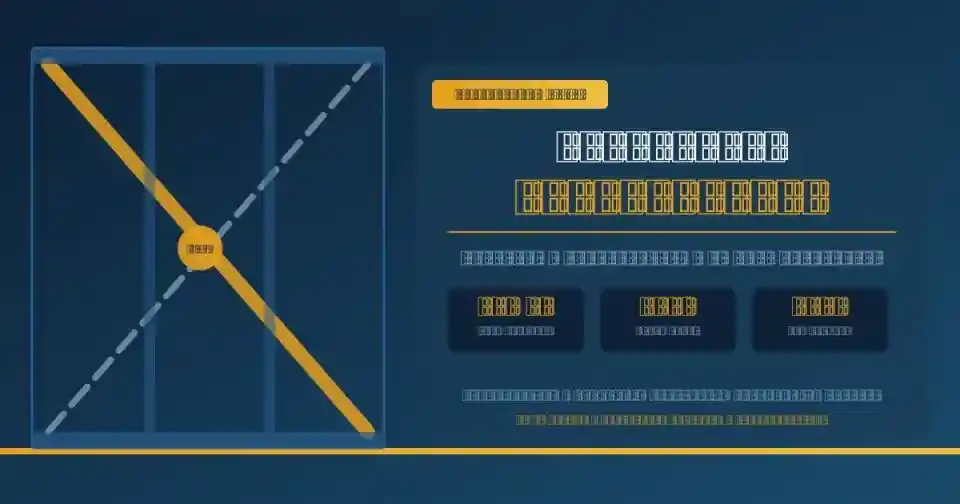
MiTek Structural BracingStrap is a G300 galvanised steel tension strap used to brace timber-framed walls in domestic construction per AS 1684. Type A (25×0.8mm or 30×0.8mm) delivers 1.5 kN/m bracing capacity; Type B (30×1.0mm) delivers 3.0 kN/m. Steel limit-state design capacities range from 4.0 kN to 6.1 kN per strap, installed as X-bracing fixed with 30×2.8mm hot-dipped galvanised nails.
Lateral loads from wind and seismic events govern the design of light-frame timber construction in Australia — yet the bracing system is one of the most frequently under-engineered elements on a residential project. Whether you are a graduate engineer selecting a bracing product for the first time, or a seasoned practitioner reviewing a builder's framing plan, understanding exactly why strap bracing works the way it does — and how to apply it within the AS 1684 framework — is non-negotiable for code compliance and structural integrity.
This technical article dissects the MiTek Structural BracingStrap system in full engineering depth: material specification, capacity derivation, code references, installation mechanics, connection design for non-standard applications, wall-height correction factors, and common site failures drawn from firsthand structural inspection experience. By the end, you will have every number and decision framework you need — without opening a separate reference.
1. What Is Structural BracingStrap? Material Specification & Code Basis
MiTek Structural BracingStrap is a cold-formed, light-gauge steel strip manufactured to G300 grade (minimum yield strength fy = 300 MPa) in accordance with AS/NZS 1397. Two thicknesses are available — 0.8 mm and 1.0 mm total coated — in widths of 25 mm and 30 mm. The hot-dip galvanised coating is classified as Z275 (275 g/m² nominal zinc mass), providing corrosion protection appropriate for sheltered interior framing environments as described in MiTek's Corrosion Resistance of MiTek Metal Connectors guide.
The product carries certification as an Engineered Building Product (EBP) and complies with both the National Construction Code (NCC) and the AS 1684 series. This dual compliance pathway is essential: it means the product can be used prescriptively under AS 1684 without further engineering justification, provided the installation conditions remain within the standard's scope.
2. Why Strap Bracing? Mechanism & Structural Logic
A timber-framed wall panel without bracing behaves as a mechanism under in-plane horizontal load — the frame racks, joints rotate, and sheathing panels separate. Bracing converts this mechanism into a stable structural system by introducing diagonal members that carry axial force.
Strap bracing is a pure tension system. Unlike let-in timber braces or structural plywood, which can carry both tension and compression, a flat steel strap has negligible compression capacity because it buckles at virtually zero load. This is why X-bracing — two straps in opposing diagonals — is mandatory: one strap is always in tension regardless of wind direction, while the other goes slack.
The tension in the strap must be transferred to the wall frame at both ends through nail fasteners into the top and bottom plates. A PlateTie, StudStrap, 30×0.8mm TieDown Strap, WallStrap, or StudLok screw is used at each end to anchor the strap to the plate, preventing peel-out under uplift. This anchorage design — not the strap itself — governs capacity in many practical situations, especially when the wall height deviates from the standard 2700 mm assumed in the published tables.
3. Type A vs Type B: Sizes, Capacities & Product Codes
The AS 1684 bracing type classification (A and B) is not a marketing label — it maps directly to specific rows in AS 1684 bracing demand tables and determines how many bracing units your wall panel contributes to the overall building bracing budget.
- Strap size: 25×0.8 mm or 30×0.8 mm
- Net section: 15 mm² minimum
- AS 1684.2/3 ref: Table 8.18(b)
- AS 1684.4 ref: Table 8.3(b) — Type A
- Nails per plate: 3 × MiTek 30×2.8mm HDG
- Nails per stud: 1 × MiTek 30×2.8mm HDG
- Panel width: 1800–2700 mm
- Strap angle: 30°–60° from horizontal
- Strap size: 30×1.0 mm only
- Net section: 21 mm² minimum
- AS 1684.2/3 ref: Table 8.18(d)
- AS 1684.4 ref: Table 8.3(d) — Type B
- Nails per plate: 4 × MiTek 30×2.8mm HDG
- Nails per stud: 1 × MiTek 30×2.8mm HDG
- Panel width: 1800–2700 mm
- Strap angle: 30°–60° from horizontal
Product Code Reference Table
| Product Code | Width (mm) | Thickness (mm) | Net Section (mm²) | Limit-State Capacity (kN) | Bracing Type | Bracing Capacity |
|---|---|---|---|---|---|---|
| PS222515 | 25 | 0.8 | 15 | 4.0 | A | 1.5 kN/m |
| PS222530 | 25 | 0.8 | 15 | 4.0 | A | 1.5 kN/m |
| PS223010 | 30 | 0.8 | 15 | 5.0 | A | 1.5 kN/m |
| PS223030 | 30 | 0.8 | 15 | 5.0 | A | 1.5 kN/m |
| PS223050 | 30 | 0.8 | 15 | 5.0 | A | 1.5 kN/m |
| PS203010 | 30 | 1.0 | 21 | 6.1 | B | 3.0 kN/m |
| PS203020 | 30 | 1.0 | 21 | 6.1 | B | 3.0 kN/m |
| PS203030 | 30 | 1.0 | 21 | 6.1 | B | 3.0 kN/m |
| PS203050 | 30 | 1.0 | 21 | 6.1 | B | 3.0 kN/m |
* Suffix numbers in product code denote coil length in metres (e.g. PS203030 = 30 m coil). Contact MiTek state office for full range availability. Highlighted rows = Type B (higher capacity).
4. Capacity Derivation: Steel Tension & Net Section Calculation
Understanding how the published limit-state capacities (4.0 kN, 5.0 kN, 6.1 kN) are derived is essential for any engineer using these products in non-standard configurations or checking compliance against a project-specific bracing demand.
4.1 Steel Tensile Capacity
The nominal tensile capacity of a flat strap cross-section is governed by two limit states under AS/NZS 4600:2018 Cold-formed Steel Structures:
4.2 Worked Example — 30 × 1.0 mm Strap (Product PS2030xx)
| Parameter | Value | Notes |
|---|---|---|
| Width, b | 30 mm | Nominal |
| Thickness, t | 1.0 mm (total coated) | Base metal ≈ 0.95 mm after deducting Z275 coating |
| Gross area, Ag | 30.0 mm² | b × t (nominal) |
| Hole diameter (nail holes) | 3 mm (pilot) + 6.5 mm (tensioner) | Critical = 6.5 mm hole governs net section |
| Net area, An | ≥ 21 mm² | Published minimum; governs design |
| fy | 300 MPa | G300 grade |
| fu | 340 MPa | Minimum for G300 |
| φNty (gross yielding) | 0.90 × 30 × 300 = 8.1 kN | Does not govern |
| φNtu (net fracture) | 0.75 × 21 × 340 = 5.36 kN | Governs — rounded to 6.1 kN per published data* |
*The published 6.1 kN value incorporates MiTek's own testing and Ct (connection reduction) factors per AS/NZS 4600, which may differ from this simplified hand calculation. Always use the published EBP capacities for design; this derivation is for educational transparency only.
5. Wall-Height Correction Factor
One of the most frequently missed adjustments in residential bracing design is the wall-height correction. The bracing capacities in Tables 1 and 2 (AS 1684.2/3 Tables 8.18(b) and 8.18(d)) are calibrated for a standard wall height of 2700 mm. For walls taller than 2700 mm, the strap angle becomes shallower, reducing the horizontal component of the strap tension force and thus the effective bracing resistance.
Correction Factor Table
| Wall Height (mm) | Correction Factor | Type A Adjusted (kN/m) | Type B Adjusted (kN/m) |
|---|---|---|---|
| ≤ 2700 | 1.00 | 1.50 | 3.00 |
| 2800 | 0.964 | 1.45 | 2.89 |
| 3000 | 0.900 | 1.35 | 2.70 |
| 3200 | 0.844 | 1.27 | 2.53 |
| 3600 | 0.750 | 1.13 | 2.25 |
| 4000 | 0.675 | 1.01 | 2.03 |
6. Step-by-Step Installation Procedure
Correct installation sequence is not optional — it determines whether the pre-tension in the strap is properly distributed and whether the full published bracing capacity is achieved. The following procedure reflects MiTek's published installation guidance supplemented with site engineering observations.
Nail the strap to the bottom plate using the specified number of 30×2.8mm HDG reinforced-head nails (3 nails for Type A; 4 nails for Type B). The strap should pass over — not through — studs unless the stud is notched with structural design justification.
Run the strap at 30°–60° from horizontal across the full bracing panel (1800–2700 mm wide). At each intermediate stud crossing, leave the strap unfixed at this stage.
Hold tension on the strap manually or with a temporary clamp and nail the second end to the top plate with the same nail count as Step 1. Do not allow the strap to bow between studs.
Fix the second strap in the opposing diagonal following the same process. Both straps must be in the same plane — crossing on the outside face of the framing.
Insert the MiTek TENS Standard Tensioner into the 6.5mm hole in each strap leg. Apply tension progressively and alternately between the two straps. Do not fully tension one strap before starting the other — this will distort the panel. Correct tension = strap taut but frame geometry unchanged.
Drive one 30×2.8mm HDG nail through each strap at every intermediate stud and rafter crossing. This prevents the strap from vibrating and ensures uniform load distribution along the panel.
7. Nail Connection Design for Non-Standard Applications
The Type A and B published capacities are conditional on using the exact nail pattern specified. For applications outside the scope of Type A or B braced panels — for example, bracing a sub-floor, a non-standard panel width, or a raked ceiling situation — the end connection must be independently designed using AS 1720.1 nail shear values for 2.8 mm diameter nails.
Design Nail Shear Capacity (AS 1720.1)
| Nail Dia. (mm) | Length (mm) | Timber Density (kg/m³) | φQn per nail (kN) — Single Shear |
|---|---|---|---|
| 2.8 | 30 | 350 (Softwood) | 0.44 |
| 2.8 | 30 | 500 (Hardwood/LVL) | 0.62 |
| 2.8 | 30 | 650 (Dense hardwood) | 0.82 |
Source: AS 1720.1:2010 Table H2.1. Values for J4 seasoned timber. Apply k1 load duration factor and k13 moisture factor as required by the project conditions.
For a Type B connection (4 nails per end) into 350 kg/m³ timber: φV = 4 × 0.44 = 1.76 kN. This must equal or exceed the horizontal component of the strap tension at the connection, confirming that the nail group — not the strap steel — is often the critical element in non-standard designs.
Need a Timber Bracing Design Review or AS 1684 Compliance Check?
M. Haseeb — Graduate Structural Engineer specialising in residential and commercial timber framing, lateral load design, and AS 1684 compliance assessments for Australian and international projects. Available for peer review, design certification, and technical consulting.
8. Strap Bracing vs Structural Plywood: Engineering Comparison
Choosing between steel strap bracing and structural plywood sheathing is one of the most common design decisions in residential timber framing. Both systems satisfy AS 1684, but they have fundamentally different structural behaviours, installation constraints, and cost profiles.
| Parameter | Steel Strap Bracing (MiTek BracingStrap) | Structural Plywood Panel |
|---|---|---|
| Load transfer mechanism | Diagonal tension (X-brace) | Shear panel — nails + diaphragm |
| Compression capacity | Negligible (tension-only) | Yes — panel carries both tension & compression |
| Max bracing capacity | 3.0 kN/m (Type B) | Up to 6.0+ kN/m (depends on thickness & nailing) |
| Installation without stud cutting | ✅ Key advantage — strap lies over framing | ❌ Requires flat, plumb framing surface |
| Suitable for retrofit | ✅ Excellent — can be added post-frame | ❌ Difficult — framing often already lined |
| Moisture sensitivity | Low (HDG steel) | High — delamination risk in wet areas |
| Electrical/plumbing penetrations | ✅ No impact on services | ❌ Requires careful coordination |
| Cost (installed) | Low | Medium–High |
| NCC / AS 1684 compliance path | Prescriptive (Type A/B) | Prescriptive (AS 1684 Table 8.18) |
| Governing standard | AS 1684, AS/NZS 4600 | AS 1684, AS/NZS 2269 |
9. Common Site Failures & How to Avoid Them
From structural inspection experience and engineering review of residential framing in Australia, the following installation defects occur repeatedly with strap bracing systems — often going undetected until a wind event exposes the failure.
| # | Failure Mode | Root Cause | Engineering Consequence | Prevention |
|---|---|---|---|---|
| 1 | Slack strap — no tensioner used | Tensioner skipped on site to save time | Geometric elongation before activation; 5–15 mm panel racking before brace engages | Inspect all straps for tautness before lining; TENS tensioner is part of the system, not optional |
| 2 | Insufficient nails at plate | Framer uses 2 nails instead of 3 (Type A) or 4 (Type B) | Connection failure before strap reaches design tension; bracing capacity reduced by 25–50% | Pre-mark nail hole positions; inspect end connections before lining |
| 3 | Strap angle outside 30°–60° | Panel too wide or wall too low; strap laid nearly flat | Horizontal force component drops; at 20° angle, effective bracing ≈ 60% of tabulated value | Check panel geometry during design — 1800 mm minimum width for standard heights |
| 4 | Wall height not corrected | Engineer applies Table 8.18 value directly for 3000+ mm wall | Bracing demand may exceed corrected capacity; non-compliant structure | Apply h_wall/2700 correction factor; recalculate number of bracing panels required |
| 5 | Single strap only (no X) | One strap omitted or inaccessible due to obstruction | System only braces one wind direction; reversed wind load has zero resistance | X-bracing is mandatory; if one diagonal is obstructed, relocate panel or use plywood alternative |
| 6 | Wrong nail type | Plain shank or non-galvanised nails used | Corrosion of nail/strap interface; connection slip; long-term capacity degradation | Specify 30×2.8mm HDG reinforced-head nails on drawing notes and inspect deliveries |
10. Installation Inspection Checklist
✅ MiTek Structural BracingStrap — Pre-Lining Inspection Checklist
- Correct strap type specified (Type A: 25×0.8 or 30×0.8mm / Type B: 30×1.0mm)
- X-bracing installed (two straps in opposing diagonals in each bracing panel)
- Strap angle between 30° and 60° from horizontal verified
- Panel width between 1800 mm and 2700 mm confirmed
- Wall height correction factor applied if h > 2700 mm (check engineer's calculation)
- Correct number of nails at each plate end (3 for Type A / 4 for Type B)
- Nails confirmed as MiTek 30×2.8mm hot-dipped galvanised reinforced head
- One nail per intermediate stud and rafter within the braced panel
- MiTek TENS tensioner installed in each strap leg — no residual slack
- Plate tie or StudStrap installed at strap ends to resist peel
- Strap fixed to top and bottom plate (not just to studs)
- No damage, kinks, or cuts in strap that reduce net section area
- Strap product code verified against specification (PS2030xx for Type B)
- Location of all bracing panels matches approved framing plan
11. FAQ — Answer Engine Optimised
The maximum published bracing capacity is 3.0 kN/m for Type B using 30×1.0mm strap per AS 1684 Table 8.18(d). The limit-state steel tensile capacity of a single strap is 6.1 kN. This applies to walls up to 2700 mm high; taller walls require a proportional reduction.
Yes. The product complies with AS 1684.3 (Cyclonic areas) for both Type A (Table 8.18(b)) and Type B (Table 8.18(d)) bracing. However, the overall building bracing design must account for the higher wind pressures specified in AS 4055 or AS/NZS 1170.2 for cyclonic wind regions, which will typically require more bracing panels and possibly uplift restraint connections at plate ends.
Only MiTek 30×2.8mm hot-dipped galvanised (HDG) reinforced-head nails must be used. These are specifically engineered to work with the 3mm nail holes in the strap. Using plain shank, electroplated, or different-diameter nails invalidates the published capacity and is non-compliant with the EBP certification.
This is determined by a full AS 1684 bracing demand calculation considering the building's floor plan, roof area, wind classification (N1–N6 or C1–C4), and roof type. As a rough guide, a single-storey 200 m² house in wind class N2 might require 8–14 bracing panels per direction. A qualified structural engineer or registered building designer must perform the calculation for each project — contact engrhaseeb.com for a professional assessment.
The product is certified specifically for timber-framed walls per AS 1684. For light gauge cold-formed steel framing, different bracing products designed for steel-to-steel connections and compliant with AS/NZS 4600 and AS 4055 should be used. Always verify with the manufacturer before substituting into a steel-framed application.
12. References & Further Reading
Standards & Technical References
- Standards Australia. AS 1684.2:2010 Residential timber-framed construction — Part 2: Non-cyclonic areas. standards.org.au
- Standards Australia. AS 1684.3:2010 Residential timber-framed construction — Part 3: Cyclonic areas.
- Standards Australia. AS 1684.4:2010 Residential timber-framed construction — Part 4: Simplified — Non-cyclonic areas.
- Standards Australia. AS/NZS 4600:2018 Cold-formed steel structures.
- Standards Australia. AS 1720.1:2010 Timber structures — Part 1: Design methods.
- Standards Australia. AS/NZS 1397:2021 Steel sheet and strip — Hot-dip zinc-coated or aluminium/zinc-coated.
- MiTek Australia. Structural BracingStrap — Engineered Building Products Data Sheet. mitek.com.au
- ABCB. National Construction Code 2022 — Volume One & Two. abcb.gov.au
- WoodSolutions. Timber-Framed Construction — Technical Design Guide. woodsolutions.com.au
- Engineers Australia. Competency Standard for Structural Engineers. engineersaustralia.org.au
About the Author — M. Haseeb | Graduate Structural Engineer
Structural engineer at Prime Engineers with expertise in residential timber framing, lateral load analysis, AS 1684 bracing design, and steel connection engineering. Open to international project collaboration, peer review, and structural consulting engagements.

Be the first to comment.