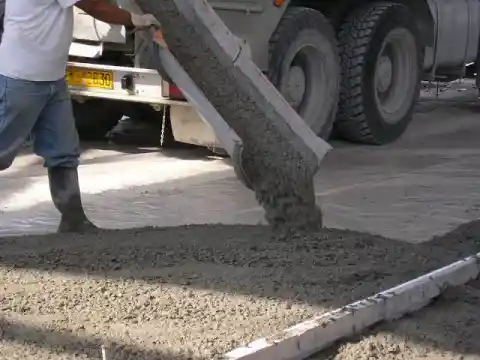
Performance-based vs prescriptive concrete specifications comes down to two questions: who designs the mix, and what gets tested. A prescriptive specification dictates the recipe — minimum cement content, maximum w/cm, caps on fly ash or slag, aggregate grading — and the specifier owns the outcome. A performance-based specification states the properties the concrete must reach (for example f′c = 4,500 psi at 28 days, surface resistivity ≥ 21 kΩ·cm, drying shrinkage ≤ 0.04%), names the test method and acceptance criteria, and leaves proportioning to the producer. Specify performance wherever a reliable test exists; keep prescriptive limits only where the code still demands them.
The gap between the two is not academic. When NRMCA reviewed 102 real US project specifications, 85% capped SCM content, 73% imposed a maximum w/cm where no exposure class required one, and fewer than 5% assigned ACI 318 exposure classes at all. In lab trials, performance mixes met every requirement at 9–15% lower material cost, and a bridge-deck mix with 15% less binder passed the chloride test that the prescriptive mix failed. This guide gives you the code limits, test criteria, an f′cr calculator and a decision tool to write a specification you can defend.
- Prescriptive = recipe + specifier risk. Performance = measurable result + producer risk for concrete as delivered.
- ACI 318-19 sets a maximum w/cm only for exposure classes F1–F3, S1–S3, W2 and C2. Anywhere else, a w/cm limit is a project choice, not a code requirement.
- Most real specifications are hybrids. The danger is clauses that conflict — e.g., a high minimum cement content plus a tight shrinkage limit.
📑 Table of Contents
- Side-by-side comparison
- What prescriptive specs control (and where they backfire)
- What a performance spec must contain
- Who carries the risk
- US, Canadian, UK/EU and Australian standards
- ACI 318-19 durability limits
- Required average strength f′cr + calculator
- Field and lab evidence
- Decision tool: which spec type fits?
- How to write a performance spec
- Hybrid spec conflicts to avoid
- Low-carbon concrete and performance specs
- Video explainers
- Free downloads and reference documents
- FAQ
- References
Performance-Based vs Prescriptive Concrete Specifications: Side-by-Side
- Min cement content, max w/cm, SCM caps, grading bands
- Specifier owns whether it works
- ASTM C94 Option B · BS 8500 prescribed · CSA prescription alternative
- Code durability limits plus some test criteria
- Risk split must be written down explicitly
- Highest risk of conflicting clauses
- f′c, resistivity, shrinkage, air, ASR, GWP limits
- Producer owns concrete as delivered
- ASTM C94 Option A · BS 8500 designed/designated · CSA performance alternative
| Aspect | Prescriptive specification | Performance-based specification |
|---|---|---|
| What is specified | Ingredients and limits: min cementitious content, max w/cm, SCM type and percentage, aggregate grading, sometimes admixture brands | Measurable fresh and hardened properties, each with a test method, test age and acceptance criterion |
| Who proportions the mix | Specifier (producer works inside tight limits) | Producer, with contractor input on placeability and finishing |
| Who owns performance risk | Owner/specifier — the producer only proves it followed the recipe | Producer for concrete as delivered; contractor for placing, consolidation and curing |
| Acceptance basis | Batch tickets plus strength cylinders | Prequalification data plus acceptance tests at stated ages |
| Innovation (Type IL cement, ternary blends, recycled aggregate) | Often blocked by caps and bans | Allowed if the test criteria are met |
| Cost and carbon | Binder-heavy; Colorado DOT found mixes running 500–1,000 psi above required strength | Optimized paste; NRMCA lab mixes cost 9–15% less in materials |
| Best fit | Small or site-batched work, properties with no reliable test, unknown supply chain | Large pours, durability-critical or low-carbon projects, certified producers with test records |
What a Prescriptive Concrete Spec Controls — and Where It Backfires
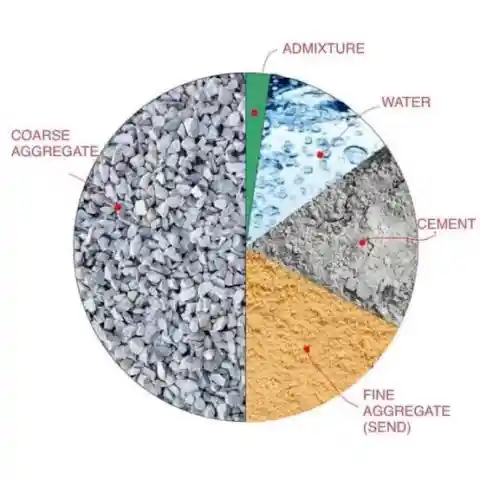
Prescriptive clauses usually exist for a reason someone once had — a cracked slab, a slow-setting fly ash mix, a supplier who couldn't be trusted. The problem is that they outlive the reason. NRMCA's survey of producers ranked 15 common prescriptive requirements by how much they restrict optimization, then checked how often the top five appear in practice.
| Prescriptive clause | Why it gets written | What the codes actually require | Performance alternative |
|---|---|---|---|
| Max w/cm on interior members | "Lower w/cm = more durable" | ACI 318-19 sets w/cm only for F1–F3, S1–S3, W2, C2 | Specify f′c only; add a permeability test if durability matters |
| Minimum cement content ("6-sack mix") | Legacy mix tables written before water reducers were common | ACI 318 has no minimum cement content; ACI 301 floor minimums allow a test-slab alternative | Strength + drying shrinkage (ASTM C157) + finishability trial |
| Cap or ban on fly ash / slag | Fear of slow set and late finishing | ACI 318 limits SCM content only for exposure class F3 | Setting time (ASTM C403) + strength at a stated age |
| 8–18 combined grading band | Segregation and finishability worries | No ACI requirement | Workability and finishing performance; NRMCA tests found no significant benefit from the band |
| Ban on ASTM C595 / C1157 cements | Unfamiliarity | Both are recognized cement specifications | Accept with the same strength and durability tests |
What a Performance-Based Concrete Spec Must Contain
ACI 329R-14 frames every performance requirement in three parts. Miss one and the clause is unenforceable.
| Performance property | Test method | Example acceptance criterion | Where it earns its place |
|---|---|---|---|
| Compressive strength | ASTM C39 / AASHTO T 22 | ACI 318-19 26.12.3: every average of 3 consecutive tests ≥ f′c; no single test below f′c − 500 psi (f′c ≤ 5,000 psi) or 0.90f′c | All structural concrete; allow 56-day age for high-SCM mixes |
| Chloride penetrability (charge passed) | ASTM C1202 | e.g., ≤ 1,500 coulombs at 45 days (used in a DOT HPC deck spec) | Decks, parking structures, marine elements |
| Surface resistivity | AASHTO T 358 | e.g., ≥ 21 kΩ·cm on 4×8 in. cylinders ("low" penetrability) | Fast QC on the same cylinders as strength |
| Formation factor | AASHTO R 101 (formerly PP 84) | Limit set by freeze-thaw exposure | Pavements under the PEM approach |
| Drying shrinkage | ASTM C157 / AASHTO T 160 | e.g., ≤ 0.04% after 28 days of drying following 7 days moist curing | Slabs on ground, decks, toppings |
| Restrained shrinkage | AASHTO T 334 (ring test) | Minimum time to cracking | Bridge decks, crack-sensitive elements |
| Freeze-thaw resistance | ASTM C231 / C173 air content; Super Air Meter; ASTM C666 | Air content per ACI 318 Table 19.3.3.1 | F1–F3 exposures, pavements |
| Alkali-silica reaction | AASHTO R 80 / ASTM C1778 | Prevention level matched to aggregate reactivity | Reactive aggregate regions |
| Sulfate resistance | ASTM C1012 | Mortar-bar expansion limit for the binder | S1–S3 exposures with alternative binders |
| Setting time | ASTM C403 | Initial set within a window that suits the finishing crew | Floors, hot or cold weather |
| Embodied carbon | Product-specific Type III EPD | GWP limit (kg CO₂e/m³) per strength class | Low-carbon and LEED projects |
Chloride penetrability classes: ASTM C1202 and AASHTO T 358
| Penetrability class | ASTM C1202 charge (coulombs) | T 358 resistivity, 4×8 in. cylinder (kΩ·cm) | T 358 resistivity, 6×12 in. cylinder (kΩ·cm) |
|---|---|---|---|
| High | > 4,000 | < 12 | < 9.5 |
| Moderate | 2,000–4,000 | 12–21 | 9.5–16.5 |
| Low | 1,000–2,000 | 21–37 | 16.5–29 |
| Very low | 100–1,000 | 37–254 | 29–199 |
| Negligible | < 100 | > 254 | > 199 |
Who Carries the Risk: Owner, Contractor and Producer
Responsibility and authority should be congruent.
| Party | Under a prescriptive spec | Under a performance spec |
|---|---|---|
| Owner / design engineer | Owns mix adequacy; must justify every limit | Assigns exposure classes per member, picks tests, ages and acceptance criteria, reviews prequalification data |
| Concrete producer | Batches the recipe; liable only for conformance to it | Designs and proportions the mix, runs QC, guarantees properties as delivered |
| Contractor | Places and finishes; "mix or workmanship?" disputes are common | Responsible for in-place concrete: placing, consolidation, curing, protection |
| Testing agency | Slump, air, temperature, strength cylinders | Adds prequalification and acceptance tests (resistivity, shrinkage, etc.) |
ASTM C94 ordering options
| ASTM C94 option | Who selects proportions | What the purchaser specifies | Character |
|---|---|---|---|
| Option A | Producer, with full responsibility | Strength (default 28 days) plus other properties the purchaser needs | Performance |
| Option B | Purchaser | The mixture proportions themselves | Prescriptive |
| Option C | Producer | Minimum cement content plus minimum strength | Hybrid |
How US, Canadian, UK/EU and Australian Standards Handle It
| Region | Governing documents | Prescriptive route | Performance route | Worth knowing |
|---|---|---|---|---|
| 🇺🇸 USA | ACI 318-19, ACI 301-20, ASTM C94 | ASTM C94 Option B; ACI 318 exposure-class w/cm limits | ASTM C94 Option A; f′cr from producer test records (ACI 301) | ACI 318 Section 1.10 allows approved alternatives; ACI 329R-14 shows how to write performance criteria |
| 🇨🇦 Canada | CSA A23.1:24 / A23.2 | Prescription alternative — owner owns performance | Performance alternative — supplier (as delivered) and contractor (in place) | The 2004 edition removed the old "common" middle option |
| 🇬🇧 UK | BS 8500-1:2023 with BS EN 206 | Prescribed concrete; standardized prescribed ST1–ST5 for small sites (mixers under 150 L) | Designated (GEN, FND, PAV, RC — accredited producers only), designed, proprietary | ST5 may be taken as no higher than C20/25 in design |
| 🇪🇺 Europe | EN 206 | Prescribed; standardized prescribed | Designed concrete (specifier states properties; producer meets them) | National annexes set durability limits |
| 🇦🇺 Australia | AS 1379-2007 with AS 3600 | Special class with composition limits | Normal class: N20–N50, slump 20–120 mm, 10/14/20 mm aggregate; special class with property limits | Concrete for AS 3600 exposure B2, C1, C2 or U is deemed special class |
For a wider map of which standard governs which element, see our guide to Australian building design codes and the exposure-class approach in masonry durability design under AS 3700.
ACI 318-19 Durability Limits: The Prescriptive Floor You Can't Skip
ACI 318 still uses maximum w/cm plus minimum f′c for durability. Because w/cm cannot be reliably verified on site, the strength value becomes the acceptance proxy. The Licensed Design Professional can propose a performance alternative, such as a permeability test, under Code Section 1.10.
| Class | Exposure | Max w/cm | Min f′c, psi (MPa) | Other requirements |
|---|---|---|---|---|
| F0 | No freeze-thaw | N/A | 2,500 (17) | — |
| F1 | Freeze-thaw, limited water exposure | 0.55 | 3,500 (24) | Air per Table 19.3.3.1 |
| F2 | Freeze-thaw, frequent water exposure | 0.45 | 4,500 (31) | Air per Table 19.3.3.1 |
| F3 | Freeze-thaw, water + deicing chemicals | 0.40* | 5,000 (35)* | Air; SCM limits per Table 26.4.2.2(b) |
| S1 | Moderate sulfate | 0.50 | 4,000 (28) | Type II / MS cement |
| S2 | Severe sulfate | 0.45 | 4,500 (31) | Type V / HS; no CaCl₂ admixture |
| S3 | Very severe sulfate | 0.45 (Opt. 1) / 0.40 (Opt. 2) | 4,500 / 5,000 | Opt. 1: Type V + pozzolan or slag |
| W0 / W1 | Dry, or wet without low-permeability need | N/A | 2,500 (17) | W1: alkali-aggregate provisions, 26.4.2.2(d) |
| W2 | In contact with water, low permeability required | 0.50 | 4,000 (28) | Alkali-aggregate provisions, 26.4.2.2(d) |
| C0 / C1 | Dry, or moist without external chlorides | N/A | 2,500 (17) | Max chloride ion 1.00% / 0.30% (non-prestressed) |
| C2 | Moist + external chlorides (deicers, seawater) | 0.40 | 5,000 (35) | Max chloride ion 0.15% (non-prestressed); 0.06% prestressed in all C classes |
*F3 plain concrete: 0.45 and 4,500 psi. w/cm limits do not apply to lightweight concrete. Values from ACI 318-19 Table 19.3.2.1 as reproduced in NRMCA's exposure-class guide — check the current code edition before specifying.
Required Average Strength f′cr: Formulas and Calculator
Whatever the spec type, the producer proportions to f′cr, not f′c. The margin depends on how much test data the producer has, which is exactly where performance specs reward a well-run plant.
Field and Lab Evidence: What Actually Changes When You Switch
Lower material cost for four performance mixes versus a prescriptive control (1,200 psi overdesign, max w/cm, 8–18 grading, no SCMs). All performance mixes met the strength, slump, shrinkage and set-time criteria. RMC Research Foundation / NRMCA, 2006
The DOT's prescriptive mix (705 lb/yd³ binder, w/cm 0.39, 15% fly ash + 7% silica fume) missed its own 1,500-coulomb limit at 45 days. All three performance mixes, at about 600 lb/yd³, passed with lower shrinkage. RMC Research Foundation / NRMCA, 2006
Minimum cement content controlled CDOT mix designs, so mixes overshot required strength by 500–1,000 psi. Suppliers on non-DOT work used less cement and more fly ash and still exceeded strength. University of Colorado Denver, 2013
Fully prescriptive deck mixes before 2006 cracked badly. MnDOT worked with ready-mix producers and had a performance-oriented spec by 2009, allowing SCM ranges and slump ranges, later adding lightweight aggregate and macrofibers. Deck performance improved. ACI University presentation
- Lead time. STRUCTURE magazine (Lyons, 2025) warns that performance criteria ask for data a supplier may not have on hand, which can stretch submittal and placement schedules. Supplier sophistication also varies widely within a market.
- Testing load and competence. A Hong Kong Development Bureau review (Prof. Y.L. Wong) lists intensive initial type testing and dependence on both designer and supplier competence as the main costs of performance specs.
- Specs that never got updated. NRMCA found ACI 318 exposure classes assigned in fewer than 5% of specs reviewed, years after ACI 318-08 introduced them. Most "durability" clauses were copied, not engineered.
Decision Tool: Which Specification Type Fits Your Project?
- Is there a standard test with an established limit for the property you care about (strength, chloride ingress, shrinkage, air)?
- Will local producers have recent test records (15+ tests, under 24 months) for similar mixes?
- Do candidate producers run certified QC and can they do prequalification testing?
- Does the schedule allow 5–8 weeks for prequalification (e.g., 7-day cure + 28-day shrinkage, 56-day resistivity)?
- Is the project targeting embodied carbon (GWP limits, EPDs, LEED)?
- Can the contract define acceptance testing and remedies for non-conforming concrete?
- Is this a small or site-batched job (a few cubic metres, hand or small mixer)?
How to Write a Performance-Based Concrete Specification
- 1Assign exposure classes to every memberList each concrete element (footings, slabs, walls, decks) and assign ACI 318 F, S, W and C classes, or the AS 3600 / BS 8500 equivalents. This decides where code limits apply and where you are free to specify performance.
- 2Choose properties that matter for each elementStrength for everything; add chloride penetrability for C2, shrinkage for slabs and decks, air and freeze-thaw for F classes. Do not specify a property you will not test.
- 3Name the test method, specimen, curing and ageExample: surface resistivity per AASHTO T 358 on 4×8 in. cylinders, moist cured, tested at 56 days. Use 56 or 91 days for high-SCM mixes.
- 4Set acceptance criteria and test frequencyState the numeric limit, how many tests form a result, the sampling frequency, and the remedy (cores, in-place testing, price adjustment or removal) if a result fails.
- 5Define prequalification submittalsRequire trial-batch or field data that show each property before placement, plus strength test records (15+ tests within 24 months) to set f′cr.
- 6Delete conflicting prescriptive clausesRemove minimum cement contents, SCM caps and grading bands that are not code-required. Keep only the ACI 318 w/cm limits that apply to the assigned exposure classes.
- 7Hold a preconstruction meetingAgree mix submittals, placement and curing responsibilities, and the testing laboratory's scope with the contractor, producer and owner before the first pour.
Hybrid Specs: Clause Combinations That Make Mixes Impossible
NRMCA's P2P guidance accepts hybrid specifications, provided prescriptive and performance requirements for the same product do not conflict. These are the conflicts we see most often:
| Conflicting combination | Why it fails | Fix |
|---|---|---|
| High minimum cement content + tight drying-shrinkage limit | More paste means more shrinkage; the producer can't satisfy both | Drop the cement minimum and keep the shrinkage limit |
| Low SCM cap + aggressive GWP limit | Portland cement drives most of concrete's CO₂ | Specify the GWP limit and remove the SCM cap |
| 28-day acceptance on a 40–50% slag or fly-ash mix | Penalizes slower-gaining, more durable binders | Accept strength and resistivity at 56 days |
| Prescriptive w/cm + "producer responsible for performance" | Authority and responsibility sit with different parties | Choose who owns the mix design and write it down |
Low-Carbon Concrete: Why Performance Specs Matter More Every Year
About 90% of concrete's embodied emissions come from cement production (STRUCTURE magazine, 2025). Prescriptive minimum cement contents and SCM caps lock that carbon in. Performance specs open the routes that actually reduce it:
- ✅ Portland-limestone cement (ASTM C595 Type IL) and performance-specified cement (ASTM C1157)
- ✅ Higher slag, fly ash or calcined clay content, judged by strength and durability tests instead of percentage caps
- ✅ Strength acceptance at 56 days where the structure is not loaded early
- ✅ GWP limits per strength class backed by product-specific EPDs, which STRUCTURE magazine recommends, using NCSEA's performance-based concrete class table as a starting point
Pair this with an accurate structural demand. Over-specifying f′c on lightly loaded members is the other big carbon driver. Our flexural analysis and design of beams guide and RCC design spreadsheet help you check what strength the design actually needs.
Watch: Performance-Based Specifications Explained
The American Concrete Institute's state-of-the-industry session covers where performance specs stand today:
For a practitioner's view of the same debate, the Concrete Logic Podcast episode on performance vs prescriptive specifications is worth the listen:
Free Downloads and Reference Documents
| Document | Publisher | Format | Access |
|---|---|---|---|
| Guide to Specifying Concrete Performance (Phase II, Hover, Bickley, Hooton) | NRMCA / RMC Research Foundation | Free download | |
| Preparation of a Performance-Based Specification for Cast-in-Place Concrete (Phase I) | RMC Research Foundation | Free download | |
| Experimental Case Study Demonstrating Advantages of Performance Specifications (Obla, Lobo) | RMC Research Foundation | Free download | |
| Prescriptive Specifications: A Reality Check (Concrete International, Aug 2015) | NRMCA | Free download | |
| Guide to Selecting Exposure Classes (ACI 318-19 tables) | NRMCA | Free download | |
| TIP 2: Establishing the Required Average Strength f′cr | NRMCA | Free download | |
| P2P Initiative resources and FAQ | NRMCA | Web | P2P hub · FAQ |
| ACI 329R-14 Report on Performance-Based Requirements for Concrete | American Concrete Institute | PDF preview / purchase | Free preview |
| Developing Criteria for Performance-Based Concrete Specifications (CDOT-2013-9) | Colorado DOT | Free download | |
| Commentary on AASHTO R 101 (Performance Engineered Mixtures) | CP Tech Center | Web | Read online |
| Performance Engineered Concrete Paving Mixtures, TPF-5(368) reports | Iowa DOT / FHWA pooled fund | PDF set | Free downloads |
| Performance Engineered Pavements technical brief | FHWA | Free download | |
| Surface resistivity / chloride penetration chart | Gilson | Free download | |
| A Scrutiny on Local Specification for Concrete (Prof. Y.L. Wong) | Hong Kong Development Bureau | Free download | |
| Types of concrete specification (BS 8500 overview) | Designing Buildings Wiki | Web | Read online |
| AS 1379-2007 Specification and supply of concrete | Standards Australia | Standard | Buy |
Building a reference library? Our code-based civil engineering textbooks and handbooks list and free civil engineering books page collect the concrete technology titles behind these specs.
M. Haseeb Mohal is a structural engineer working on reinforced concrete and steel design. For structural design support or a second look at a project's concrete requirements, see the portfolio or connect on LinkedIn.
FAQ: Performance-Based vs Prescriptive Concrete Specifications
References
- ACI Committee 329 (2014). Report on Performance-Based Requirements for Concrete (ACI 329R-14). American Concrete Institute.
- ACI Committee 318 (2019). Building Code Requirements for Structural Concrete (ACI 318-19), Table 19.3.2.1 and Section 26.12.
- Obla, K.H. and Lobo, C.L. (2015). "Prescriptive Specifications: A Reality Check." Concrete International, August 2015, pp. 29–31.
- Obla, K. and Lobo, C. (2006). Experimental Case Study Demonstrating Advantages of Performance Specifications. RMC Research Foundation.
- Bickley, J., Hooton, R.D. and Hover, K.C. (2006). Preparation of a Performance-Based Specification for Cast-in-Place Concrete. RMC Research Foundation.
- Ballard, Z.J., Durham, S. and Liu, R. (2013). Developing Criteria for Performance-Based Concrete Specifications. Report CDOT-2013-9, Colorado DOT.
- Lyons, M. (2025). "Performance-Based Specifications and Embodied Carbon." STRUCTURE magazine.
- NRMCA. Guide to Selecting Exposure Classes and TIP 2: Establishing the Required Average Strength.
- ASTM C94/C94M, Standard Specification for Ready-Mixed Concrete; AASHTO T 358, Surface Resistivity Indication of Concrete's Ability to Resist Chloride Ion Penetration.
- CSA A23.1:24, BS 8500-1:2023, EN 206 and AS 1379-2007 (specification routes as summarized above).
Related Articles on CivilMat
- Flexural Analysis and Design of Beams: Complete Engineering Guide
- 1 Excel Sheet for All RCC Designs — Beam, Slab, Column, Footing
- All Excel Sheets for Slab Design
- Masonry Durability Design Under AS 3700: Exposure Environments Explained
- Australian Building Design Codes: Which Standard Applies to What?
- Structural Health Monitoring (SHM): Sensors, Systems and Costs
- Most Recommended Waterproofing Materials for Concrete





Be the first to comment.